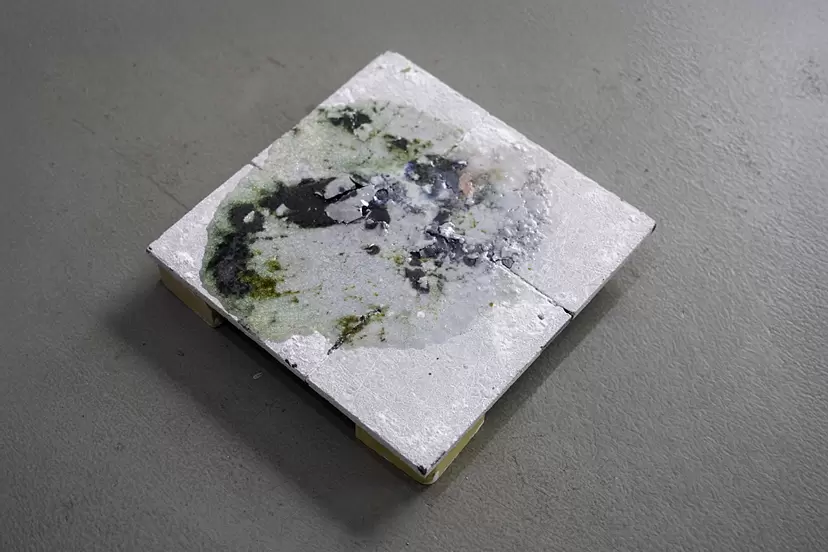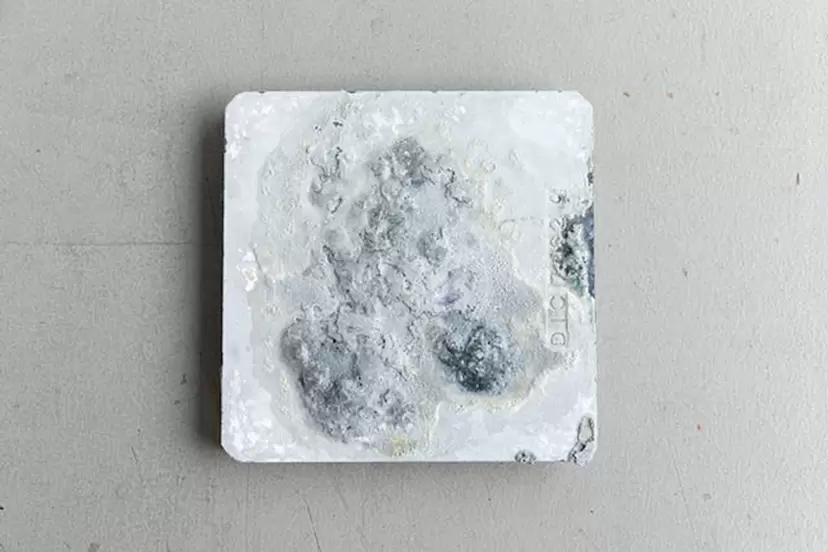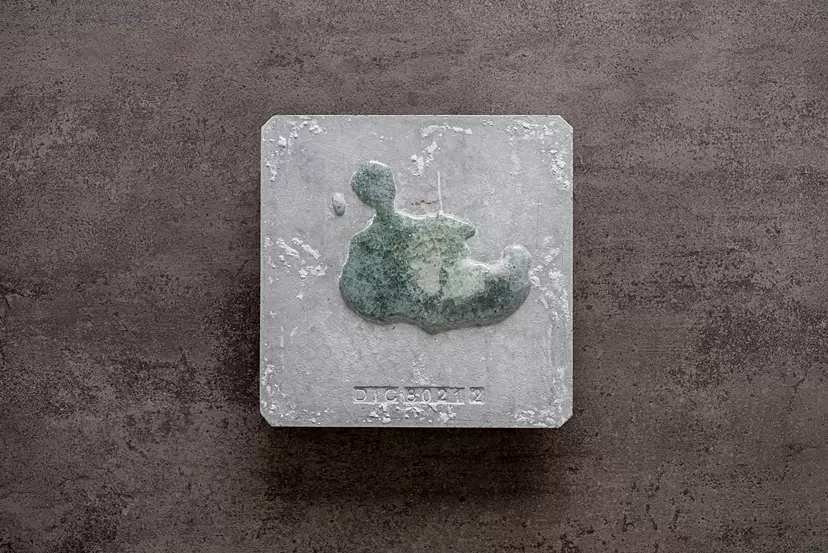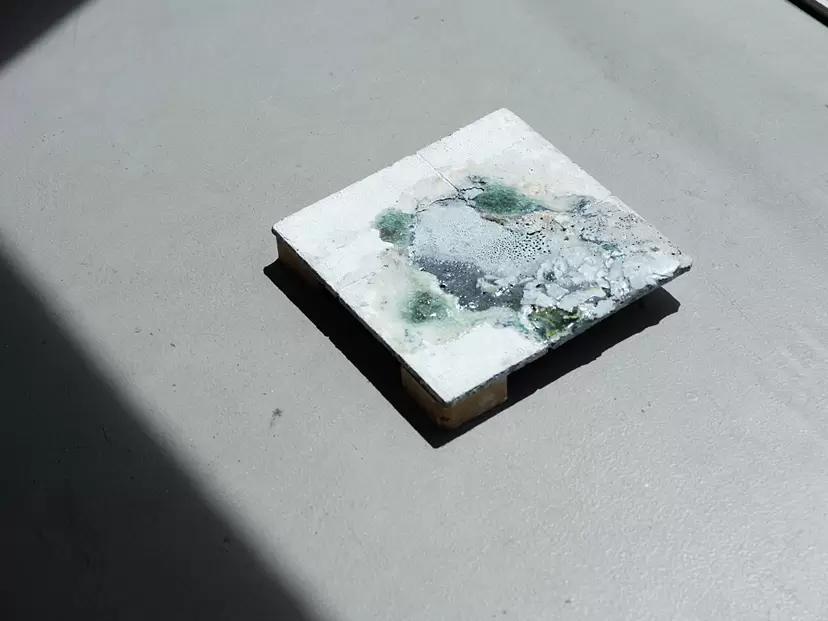
关于作品
- 制作年份
- 2009
- 材料或技法
- 玻璃, 钢, 其他的
- 尺寸
- -
- 版本
- 独特
- 签名
- 没有设置
- 制作人员名单
- photo credit: William Gomes
- 画框
- 不包含
- 作品证书
- 没有设置
- 类别
- 雕塑
- 风格
- 其他的
作品详情
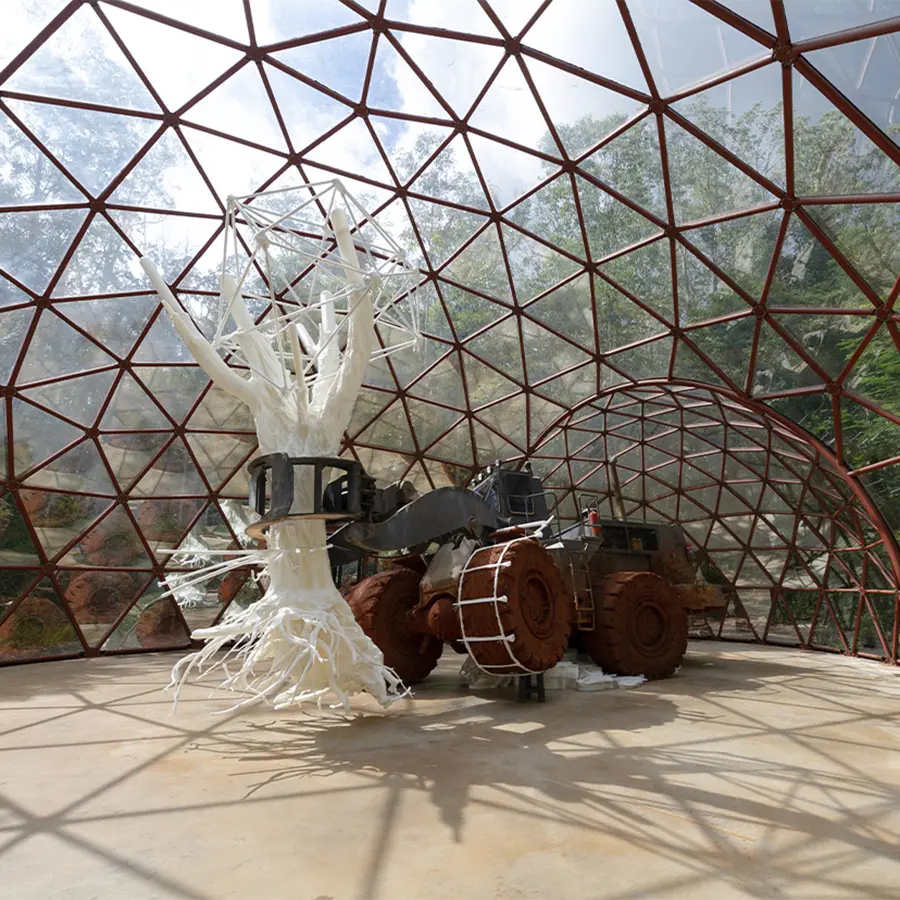
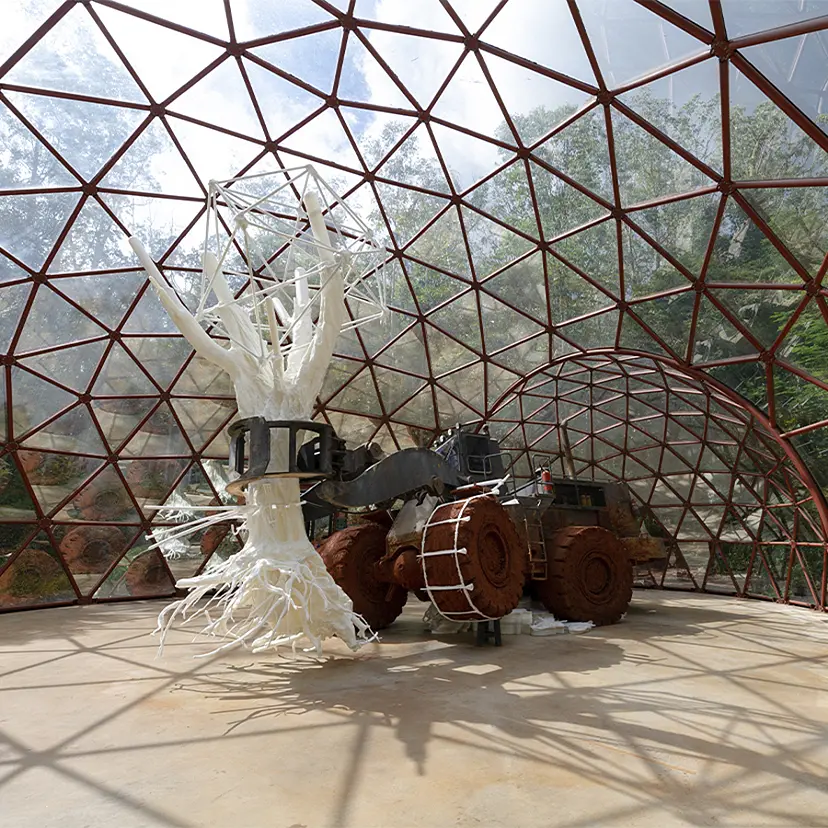
インスタレーション作品 《De lama lâmina》(2009)の始まりは、2004年にサルバトール・カーニバルで、マシュー・バーニーが音楽家アルト・リンゼイと共に行ったパフォーマンスだった。そして、イニョチンのMarcenaria Galleryで展示されている同名のビデオの基礎にもなっている。
マシュー・バーニーは、Bahian Candomblé ( バヒア州サルバトール発祥の伝統舞踊で、アフリカ系ブラジル人が神に敬意を表して踊るダンス ) を参考にし、オグン ( 鉄と戦闘と技術の神 ) と、オリーシャ ( 森と植物と自然の神 ) とのあいだの衝突を、本作品で複雑な物語に仕立て上げた。神話的な物語はバーニーの作品の中で不変のものであり、彼はアフロ・ブラジルのシンクレティズムの中に、物事の弁証法的な性質への興味を探求するための肥沃な分野を見出した。
イニョチンのために作られた本インスタレーションでは、場所が重要な役割を果たした。作品の解釈を生態学に開かれ、環境に対するアーティストの関心を反映させるだけでなく、オリーシャを暗示させる自然要素に光をあてるため、公園の中心から遠く離れた森の中を設置場所に選んだ。外部と内部の平面が共存していることが、《De lama lâmina》(2009)の基本的な要素である。作品外部は一見終わらないシナリオに則っており、荒廃と荘厳さによって統制されている。昔から変わらない鉱石の丘と倒れた木々の景色が対峙し、鉄とガラスで構成された幾何学的なドームが未来的なコントラストをなしている。作品内部は機械によって支配され、彫刻から突出した人工物は木を表現している。そして、パフォーマンスと映画に登場したトラクターの不安定な状態で『固まった』瞬間をとらえた大型彫刻作品へと変化させた。本作品を貫く緊張感が、破壊と創造、進化と保守、生と死の間の二重性を想起させる。
The installation De lama lâmina (2009) is the latest development of a project that beggined from a performance presented in partnership with the musician Arto Lindsay, during the Salvador Carnival in 2004, and which also served as the basis for the homonymous video presented in Inhotim at the Marcenaria Gallery. In these works, Matthew Barney uses the Bahian Candomblé as a reference source to weave a complex narrative about the conflict between Ogum, orisha of iron, war and technology, and Ossanha, orisha of forests, plants and the forces of nature. Mythological narratives are a constant in the work of Barney, who found in Afro-Brazilian syncretism a fertile field to explore his interest in the dialectical nature of things. Created especially for the context of Inhotim, the location of the installation is an important part of its design. The choice for the forest far from the park's core opens the reading of the work to the field of ecology and reflects the artist's environmental concern, but also highlights natural elements that allude to the orixás - the iron ore of the soil and the eucalyptus trees The coexistence between an exterior and an interior plane is a fundamental element of De lama lâmina (2009). Outside, in a seemingly unfinished scenario, devastation and the sublime take hold. The steel and glass geodesic domes offer a futuristic contrast to the ancestral landscape of ore hills and felled trees. Inside, space is taken over by the machine, a human construction that erects a sculpture that represents a tree. Used in performance and filming, the tractor, here devoid of all its functions, is transformed into a large sculpture "frozen" in an instant of instability. This tension constitutes the organizing principle of the work, evoking the dualism between destruction and creation, progress and conservation, fertility and death.
A instalação De lama lâmina (2009) é o último desdobramento de um projeto que teve origem numa performance realizada em parceria com o músico Arto Lindsay, durante o carnaval de Salvador, em 2004, e que também serviu de base para o vídeo homônimo apresentado em Inhotim na galeria Marcenaria. Nesses trabalhos, Matthew Barney toma o candomblé baiano como fonte de referência para tecer uma complexa narrativa sobre o conflito entre Ogum, orixá do ferro, da guerra e da tecnologia, e Ossanha, orixá das florestas, das plantas e das forças da natureza. Narrativas mitológicas são uma constante na obra de Barney, que encontrou no sincretismo afro-brasileiro um campo fértil para explorar seu interesse pela natureza dialética das coisas. Criada especialmente para o contexto de Inhotim, a localização da instalação é parte importante de sua concepção. A escolha pela mata afastada do núcleo do parque abre a leitura da obra para o campo da ecologia e reflete a preocupação ambiental do artista, mas também coloca em evidência elementos naturais que aludem aos orixás - o minério de ferro do solo e as árvores de eucalipto da mata.A coexistência entre um plano exterior e um interior é elemento fundamental de De lama lâmina (2009). Do lado de fora, num cenário aparentemente inacabado, a devastação e o sublime se instauram. Os domos geodésicos de aço e vidro oferecem um contraste futurista à paisagem ancestral de morros de minério e árvores abatidas. Do lado de dentro, o espaço é tomado pela máquina, construção humana que ergue uma escultura que representa uma árvore. Usado na performance e nas filmagens, o trator, aqui desprovido de todas as suas funções, é transformado numa grande escultura "congelada" num instante de instabilidade. Esta tensão constitui o princípio organizador da obra, evocando o dualismo entre destruição e criação, progresso e conservação, fecundidade e morte.
Support art institutes temporarily closed due to the COVID-19 pandemic
支援できる美術館はこちら
Below is a link to the art institute that you can support
展览资讯
- 当前的展览
- ArtSticker Brazil2020.05.18 - 2099.05.18
艺术家

Artist
American, b. 1967 Known for large-scale multimedia projects—often made in series over several years—Matthew Barney is among the most ambitious artists of the past two decades. His work is invested with layers of art-historical references, archetypal imagery, and historical re-enactment. His best-known work, The Cremaster Cycle (1994-2002), is an epic story told through five feature-length films. One of the suite’s recurrent themes uses the biological process of sexual maturation as a metaphor for artistic creation and development. Much of the action is structured in a way that is or alludes to choreography. “My interest in dance has to do with the basic drama of an object in space, interaction with gravity, and the potential for the object to fall over or to fail,” he has said. The work was executed in collaboration with dozens of other artists, including Richard Serra and Norman Mailer. He was awarded the Hugo Boss Prize in 1996 and the Europa 2000 Prize at the 1993 Venice Biennale.
查看艺术家信息