


Scarlet Birds, Crimson Sky (Nepia)
Year: 2010
Material/Technique: Others
Size: 38 × 27.5 × 13.5 cm
Edition: Unique
Signed:Not Included
This artwork can no longer be purchased.
SOLD OUT
Note: Prices are displayed as reference prices converted at the exchange rate. Payments are made in Japanese yen.

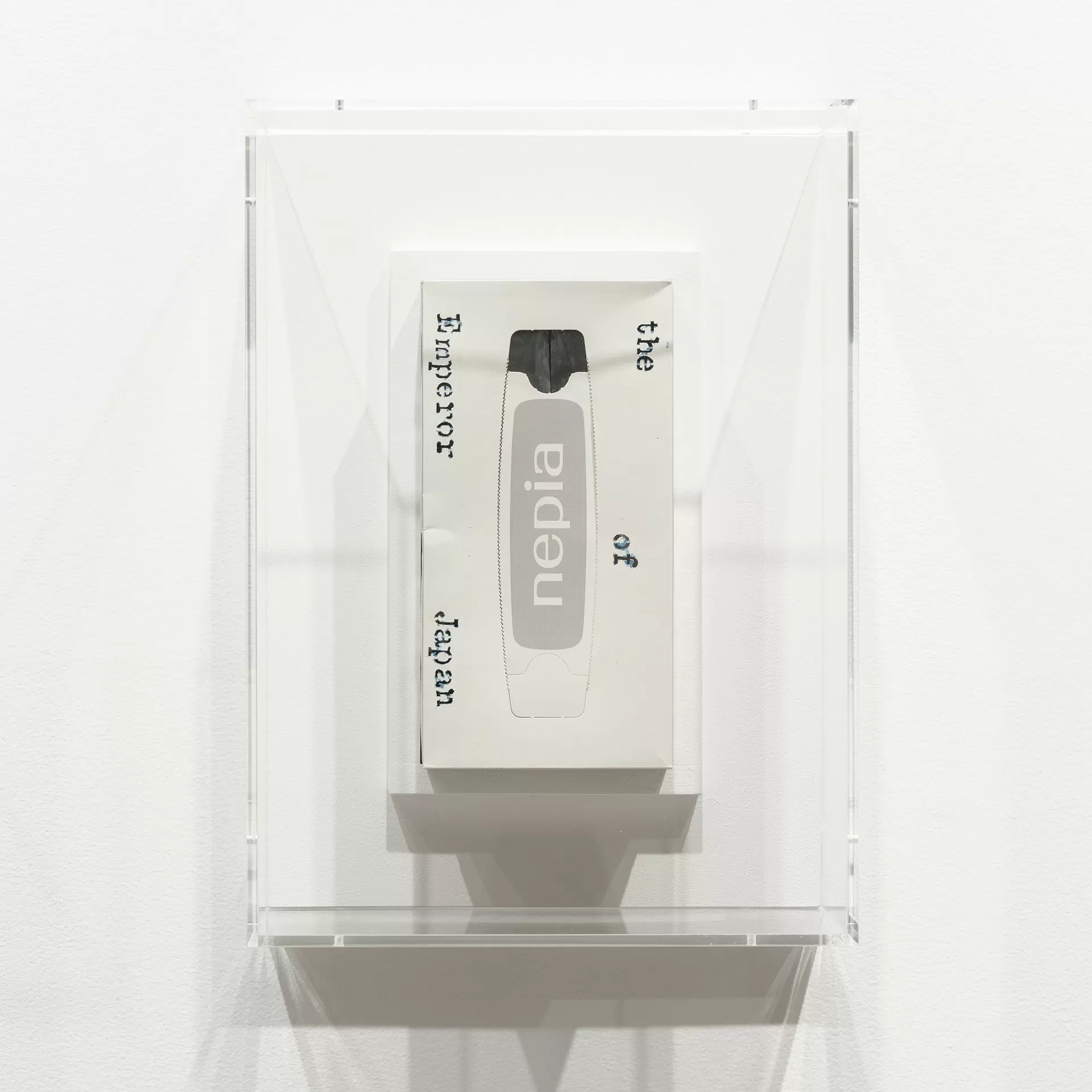
About the Work
- Year
- 2010
- Material/Technique
- Others
- Size
- 38 × 27.5 × 13.5 cm
- Edition
- Unique
- Signed
- Not Included
- Frame
- Included
- Work Certificate
- Included
- Distributor of artworks
- The Chain Museum
- Ship-from Area
- Tokyo
- Days Until Dispatch
- 展覧会終了後、約1ヶ月
- Category
- Installation
- Style
- Society / Politics / History
Work Details
Photo by Jun Yokoyama
■ Organizer's comments
At "Gallery & Restaurant Butaiura," we are pleased to present a solo exhibition by Yuken Teruya, an artist from Okinawa currently based in Berlin.
What comes to mind when you think of Okinawa? Perhaps a tropical paradise with beautiful, endless seas? Laid-back residents who laugh off troubles with the phrase "Nankurunaisa"? Or maybe you think of the idol groups that were hugely popular in the 1990s? However, while Okinawa often carries such a bright, utopian public image, it is also the only place in Japan where ground battles occurred during World War II, and following the war, it remained under U.S. military control until 1972. Even today, approximately 70% of the total land area occupied by U.S. military bases in Japan is concentrated in Okinawa.
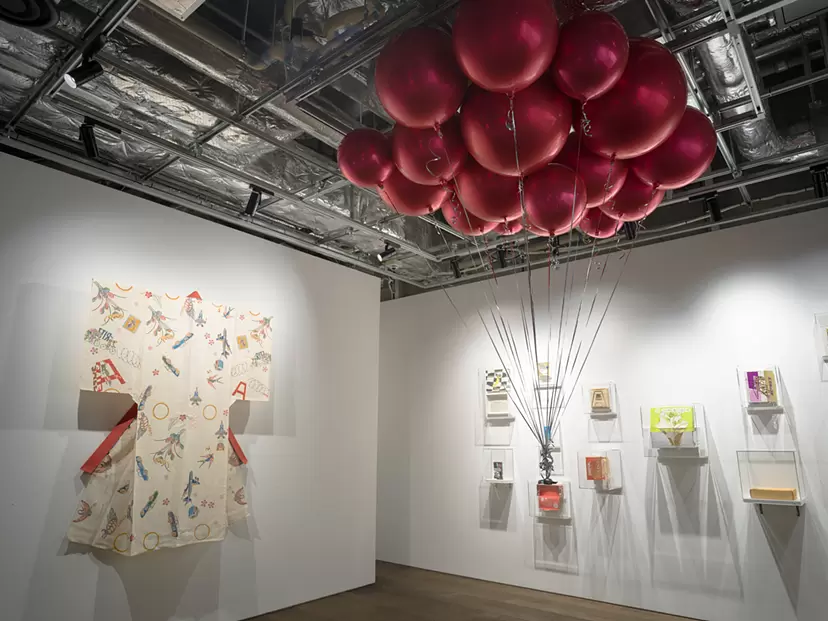
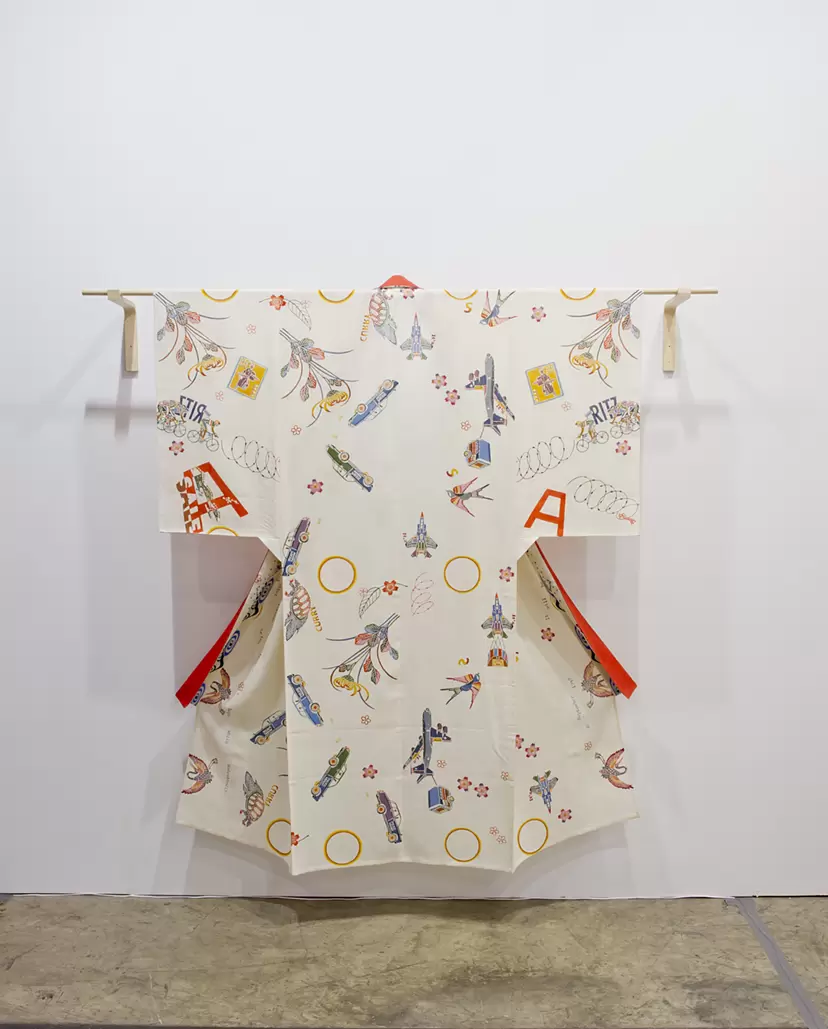
Yuken Teruya’s works use familiar materials and everyday concepts while addressing themes rooted in Okinawa’s history, the U.S. military presence, and the systems of power and control within society. At the heart of this exhibition are Aka no Tori, Kurenai no Sora (2010), a piece using Bingata, a traditional Okinawan dyeing technique, combined with imagery from everyday life in Okinawa, and new works from his Monopoly series, which uses the capitalist game as a motif for the negotiation and appropriation of land. Through this exhibition, Teruya brings to light the political conditions and critiques of consumerism that lie beneath the glamorous surface. His questions, posed through his works, inspire imagination to think about our collective future and provide insights into dialogue that transcends social divisions.
Photo by Jun Yokoyama
■ About Scarlet Birds, Crimson Sky
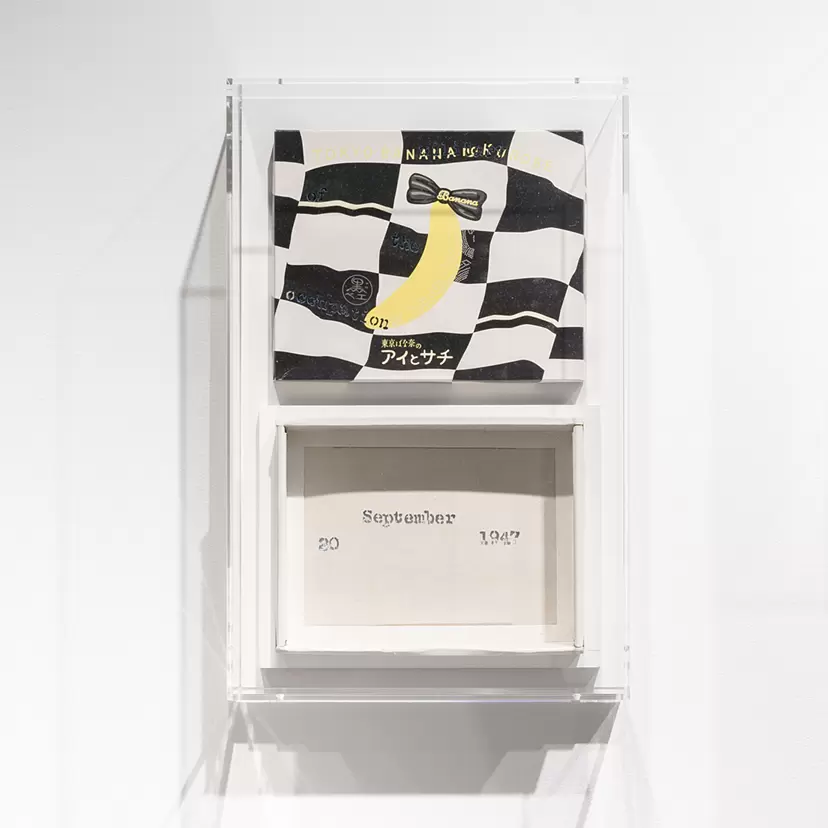
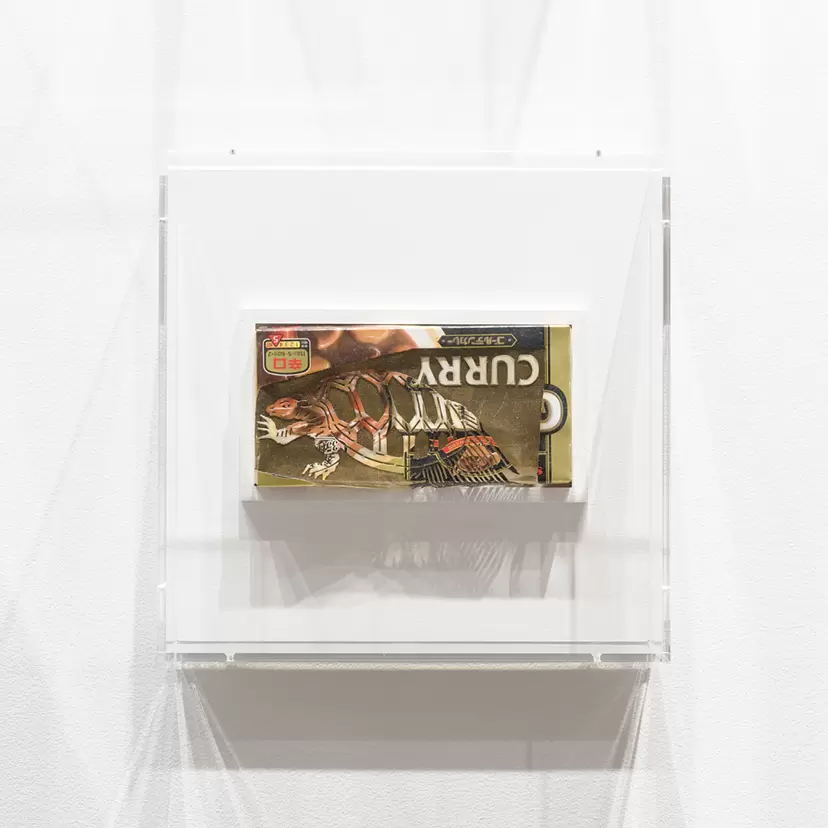
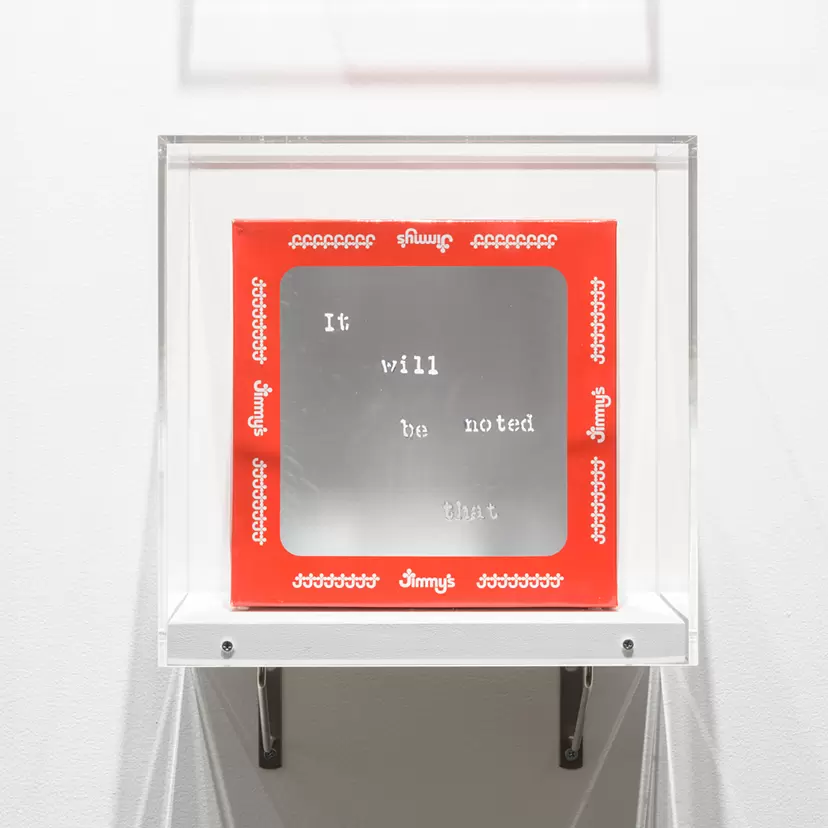
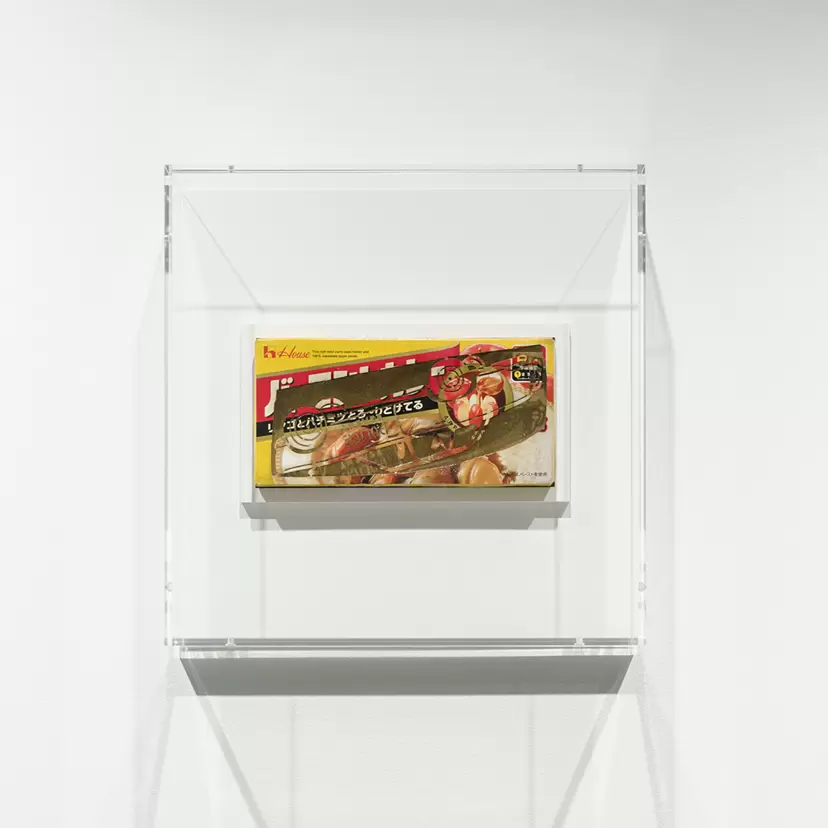
Police cars, A signs, fences of the US military base in Okinawa, and crimson kimonos dyed with motifs of everyday life in post-war Okinawa are lined up on fighter jets that contrast with traditional patterns of Kachofugetsu, and empty boxes of confectionaries and daily necessities consumed as patterns when making crimson dye are lined up.
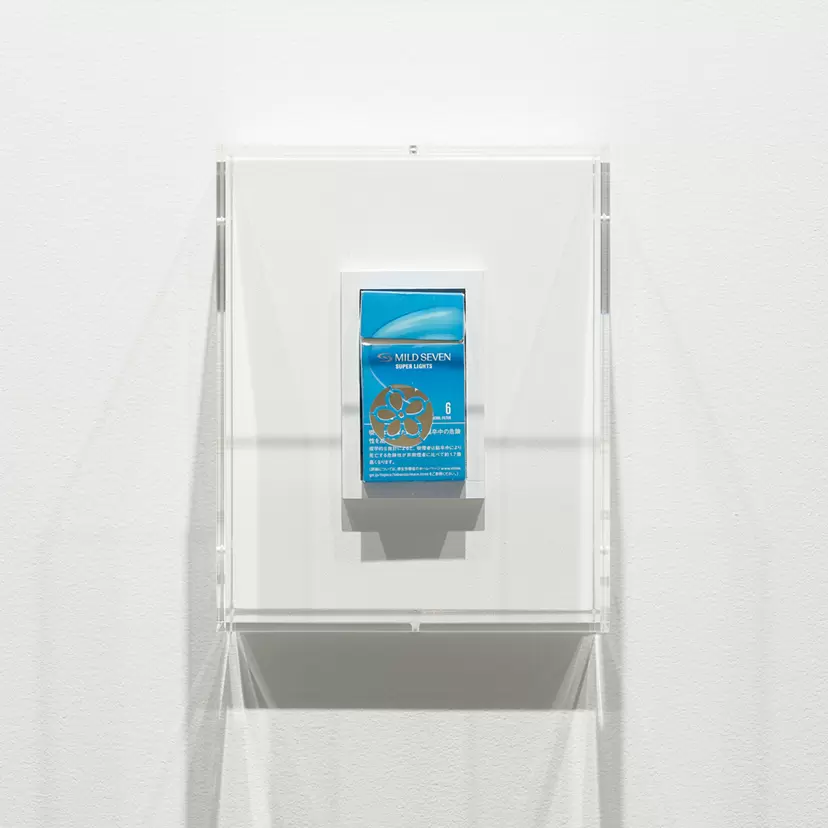
Among these daily necessities, products that can be obtained throughout Japan, such as curry roux, KFC, tobacco, and Pocky, are also included. The fact that Okinawa's unique motifs and mass-produced products are mixed up raises the question that “Okinawa's issues,” which still suffer from base issues and cannot be clarified after the war, are “Japan's issues.” Also, mass-produced Okinawan souvenir boxes set out “Okinawan uniqueness” as a commercial value targeting non-Okinawans, and also give an impression of the strength of “Okinawa” as a party trying to establish a position within consumerism.
How do you positively accept consumer culture? The “model” of post-war Okinawa overlaps with trademarks for energy drinks and foreign products, and how is the time and conflict of the 80 years after the war worth consumer culture value, and what kind of questions can be asked.
In 1947, from the ruins of Shuri, where almost all cultural properties and lives were reduced to ashes, the crimson reconstruction began from memories ingrained in the hands. Mr. Eiki Shiroma carved patterns with military maps and Hatron paper after use by the Japanese and US military. Mr. Chinen Sekihiro made a blade with a clock mainspring, and drew a design he inherited from his grandfather on an American soldier's notebook. Amidst the ruins, a legitimate red type has been revived from military scrap materials. The passion of both men who revived Benigata is the source of my Benigata works.
(Written by Teruya Yuken, edited by Saiki Yuki)
■ Artwork information
・Title: Scarlet Birds, Crimson Sky (Nepia)
・Production year: 2010
・Medium: Cutout, ink, Nepia tissue paper package
・Signed on the Certificate of Authenticity
■ Installation views
Photo by Jun Yokoyama
Photo by Jun Yokoyama
Exhibition Information
- Past Exhibitions
- Teruya Yuken solo exhibition “NEVER END”11.16.2024 - 01.19.2025
How to Buy

This artwork can no longer be purchased.
SOLD OUT
Note: Prices are displayed as reference prices converted at the exchange rate. Payments are made in Japanese yen.
Need help with purchasing?

Join the waiting list
Join the waiting list to be notified when artworks become available for purchase.
Start Chat
Our art concierge is here to help. Please feel free to chat with us about artwork recommendations or issues with purchasing.
Artist

Artists
Graduated from Tama Art University, Faculty of Fine Arts, Department of Oil Painting in 1996 1999 Maryland Institute College of Art (USA) Post-Bachelor Program Completed 2001 School of Visual Arts MFA (USA) completed
See artist informationSend a Sticker
Support Request Message
Send a Sticker to this artwork and support the artist.(¥160〜)
What is Sticker?
-