Magic Square

Year: 1977
Material/Technique: Others
Size: -
Edition: Unique
Signed:Not Set

About the Work
- Year
- 1977
- Material/Technique
- Others
- Size
- -
- Edition
- Unique
- Signed
- Not Set
- Frame
- Not Included
- Work Certificate
- Not Set
- Category
- Sculpture
- Style
- Others
Work Details
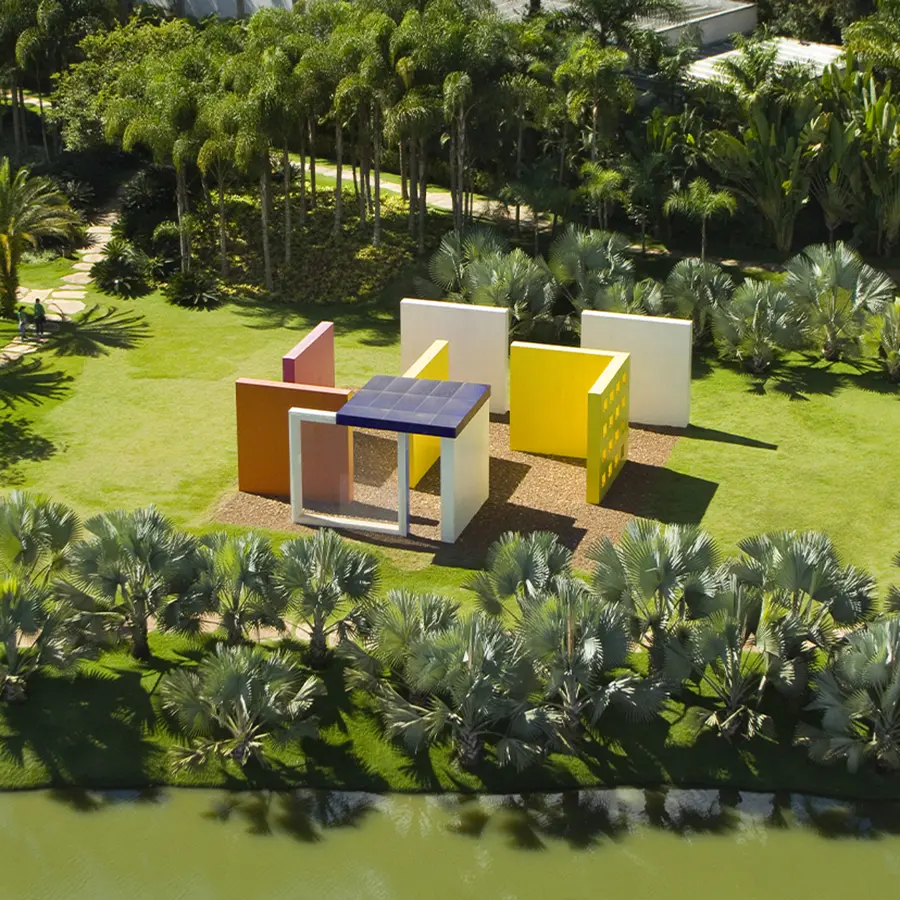
《Magic Square # 5》(1977)は、幾何学的な形態、そして公共広場(プラザ)という両者の意味合いでのスクエアというアイデアを軸に展開された、6つの作品群のうちの一つである。これらの作品はアーティストがこれまでの人生で挑戦したことがない野外での建築構造への提案であり、テキスト、図面、テクニカルデザイン、ダイアグラム、モデル、そしてサンプルにより構成された、緻密で詳細なプランからなる。幾何学的な四角形に基づくこれらのスペースは、鑑賞者が形、色、そして素材と直に触れ合える一方で、それぞれが一人の時間、もしくは誰かとともに時間を過ごすことができる場として提案される。オイチシカはキャリアの初期から、自身の作品を名付け、そして整理するカテゴリーを作ってきた。このように考えると、《Magic Squares》は《Penetráveis》のグループに属している。これは色がどのようにスペースを占めるかに関するアーティストのリサーチが環境という規模にまで至り、建築スペースの改築提案したり、そこに庭、公共広場、迷路、楽しげな公園、そして倉庫といった意味を持たせたりといったものである。遺作として作られたこれらの作品は、オイチシカのレガシーを広げるという一貫した意味を持ち、アートと生活をつなげるという彼の熱のこもった提案に新たな活力を与えるものである。
Magic Square # 5 (1977) is part of a group of six artworks articulated around the idea of a square in both senses of the word a geometric shape and a public plaza. These artworks are proposals for open air architectural structures that the artist never executed during his life, existing as minutely detailed plans composed of texts, blueprints, technical designs, diagrams, models and samples. Based on the geometric square, these spaces are offered to the viewer as public squares where people can spend time either alone or in shared experience with others, while getting into live contact with forms, colors and materials. Since the beginning of his career, Oiticica tended to create categories for naming and organizing his artworks. Thus, the Magic Squares belong to the group of the Penetráveis [Penetrables], in which the artists research concerning the occupation of space by color took on an environmental scale, proposing a renovation of architectural space, lending it aspects of a garden, a public square, a labyrinth, a fun park or a warehouse. Constructed posthumously, these artworks are a coherent means of furthering Oiticicas legacy, lending new vitality to his ambitious proposal of linking art and life.
Magic Square # 5 (1977) faz parte de um grupo de seis trabalhos que se articulam em torno da praça e do quadrado, já que em inglês a palavra square tem os dois significados. Estas obras são propostas de edificações ao ar livre, que o artista não chegou a executar em vida e cujas instruções de realização foram minuciosamente anotadas por ele em textos, plantas, desenhos técnicos, diagramas, maquetes e amostras. Baseados no quadrado, estes espaços se oferecem ao espectador como grandes áreas de permanência e de convívio, colocando-o em contato vivencial com a forma, a cor e os materiais. A tendência à criação de categorias para nomear e organizar suas obras é marca da produção de Oiticica desde o início. Assim, os Magic Squares pertencem ao grupo de trabalhos Penetráveis, em que a pesquisa do artista em torno da ocupação do espaço pela cor atinge escala ambiental e se articula com uma idéia de renovação do espaço arquitetônico, aproximando-o ao jardim, à praça, ao labirinto, ao parque de diversão e ao barracão. Construídas postumamente, estas obras constituem uma maneira coerente de fazer jus ao legado de Oiticica, mantendo viva sua ambiciosa proposta de junção entre arte e vida.
Support art institutes temporarily closed due to the COVID-19 pandemic
支援できる美術館はこちら
Below is a link to the art institute that you can support
Exhibition Information
- Current Exhibition
- ArtSticker Brazil05.18.2020 - 05.18.2099
Artist

artist
Brazilian, 1937–1980 A prominent figure in the modernist Brazilian avant-garde of the 1950s and ’60s, Hélio Oiticica produced paintings in the Neo-Constructivist style of geometric abstraction, experimenting with color, form, and material. Oiticica’s Metaesquemas (1957–8), painted in gouache on cardboard, are grids of rectangular or rhomboidal shapes in variations of blue, red, and black; the shapes often appear to mirror each other bilaterally, but on closer inspection conform to more complex patterns. He also produced three-dimensional works, often crude painted boxes suspended in space and painted in warm hues of red, yellow, and orange. Oiticica’s Parangoles (1964–8), multicolored versions of carnival costumes, were the product of time spent living among the inhabitants of favelas in Rio de Janeiro. He and his younger brother Cesar studied under Ivan Serpa and were associated with Serpa’s Grupo Frente, a loose collective of artists that also included Lygia Clark and Lygia Pape. Modernists Piet Mondrian, Paul Klee, Wassily Kandinsky, and Kasimir Malevich were also major influences on Oiticica’s work.
See artist information