


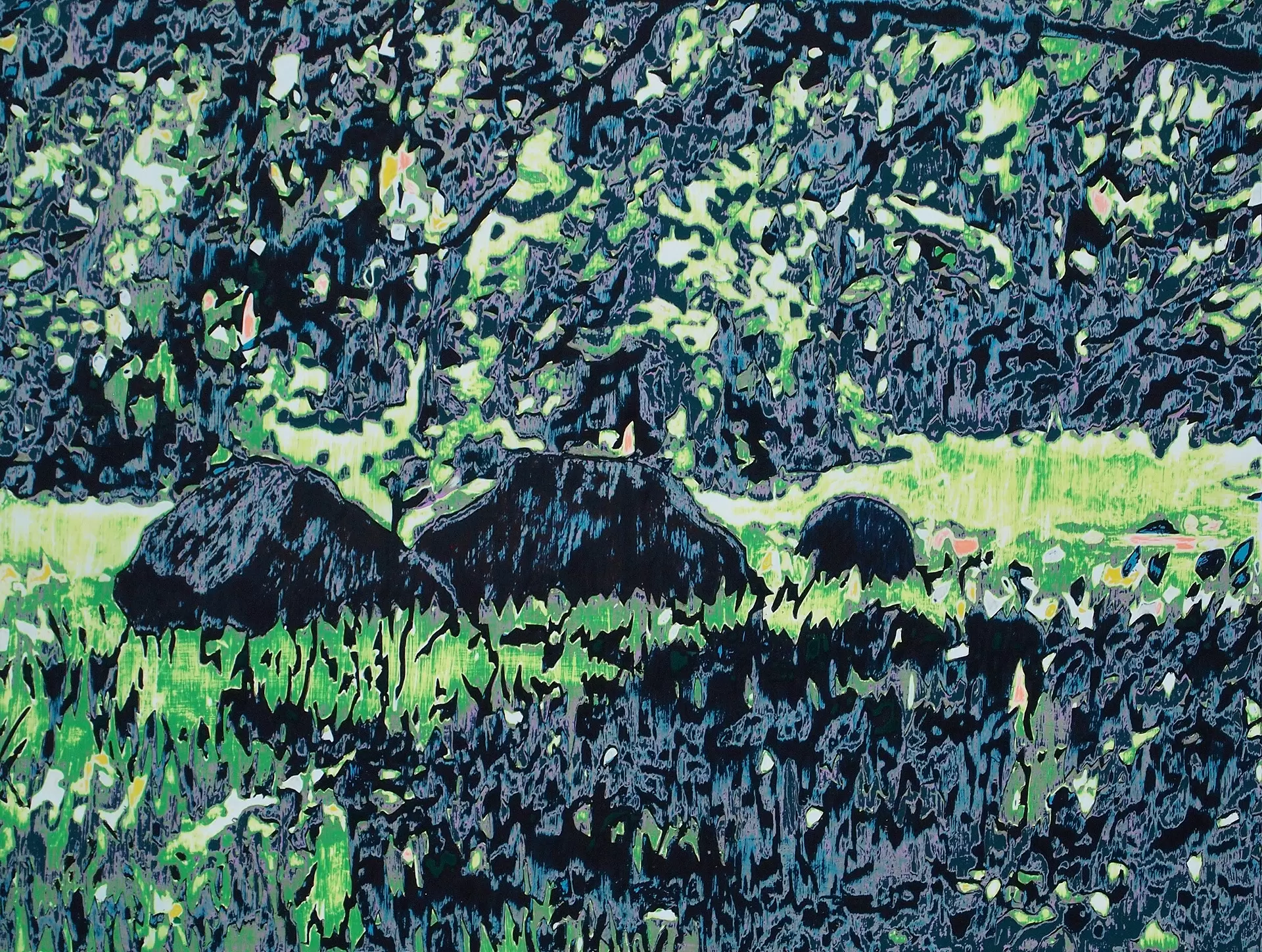
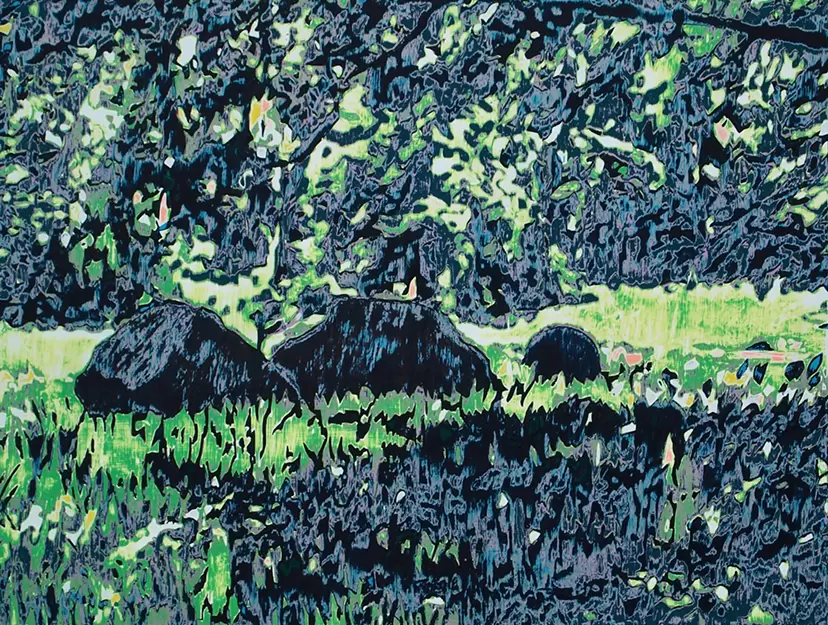
the eternal trio 8 (the vanishment 4)
製作年份: 2015
材料或技法: 丙烯酸纖維, 帆布
尺寸: 60.6 × 80.4 × 2.7 cm
版本: 獨特
簽名:沒有設定


關於作品
- 製作年份
- 2015
- 材料或技法
- 丙烯酸纖維, 帆布
- 尺寸
- 60.6 × 80.4 × 2.7 cm
- 版本
- 獨特
- 簽名
- 沒有設定
- 製作人員名單
- ©︎Hideaki Fujimoto
- 畫框
- 不包含
- 作品證書
- 包括
- 藝術品經銷商
- Hideaki Fujimoto
- 發貨區域
- 沖繩縣
- 發送前的天數
- 大約兩週
- 類別
- 繪畫
- 風格
- 半抽象, 數字的, 日常生活, 哲學/虛榮, 亞洲
作品詳情
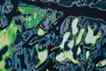
A landscape that makes time visible—a question posed toward what it means to exist.
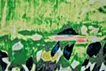
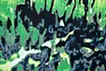
This work dates from the final phase of a period in which Fujimoto's landscapes were moving from figuration toward abstraction. Through layering and grinding, the surface is held between representation and abstraction—capturing, as a painting, the very process by which a landscape transforms.
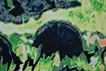
At the center of the painting, two rocks and one rounded mass—this "trio"—remain rooted in the earth, unmoving and unshaken. Everything around them, by contrast, seems to lose its edges and dissolve, shaped by a process of repeated layering and grinding. Between what stays still and what keeps changing, I wanted to give form to the very texture of time itself.
The title isn't rooted in nostalgia. It comes from something closer to a revelation—standing in a hamlet on Ishigaki Island, I was struck, almost physically, by the question of what it means to exist, before I had any way to think it through. Pairing the opposing words "eternal" and "vanishing" was my attempt to hold onto that initial, unfiltered impulse.
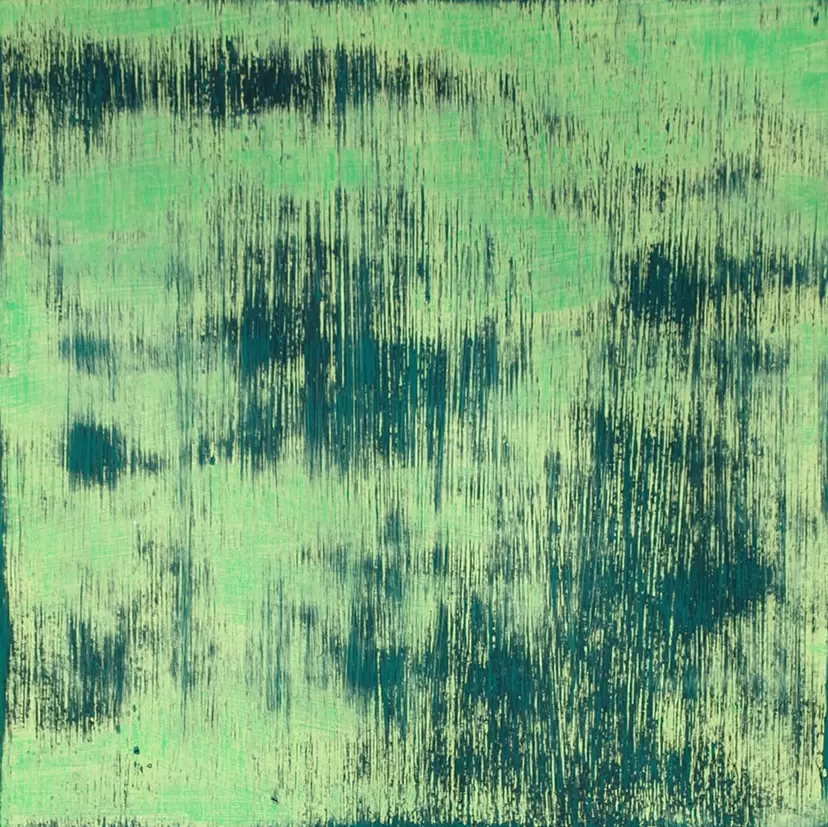
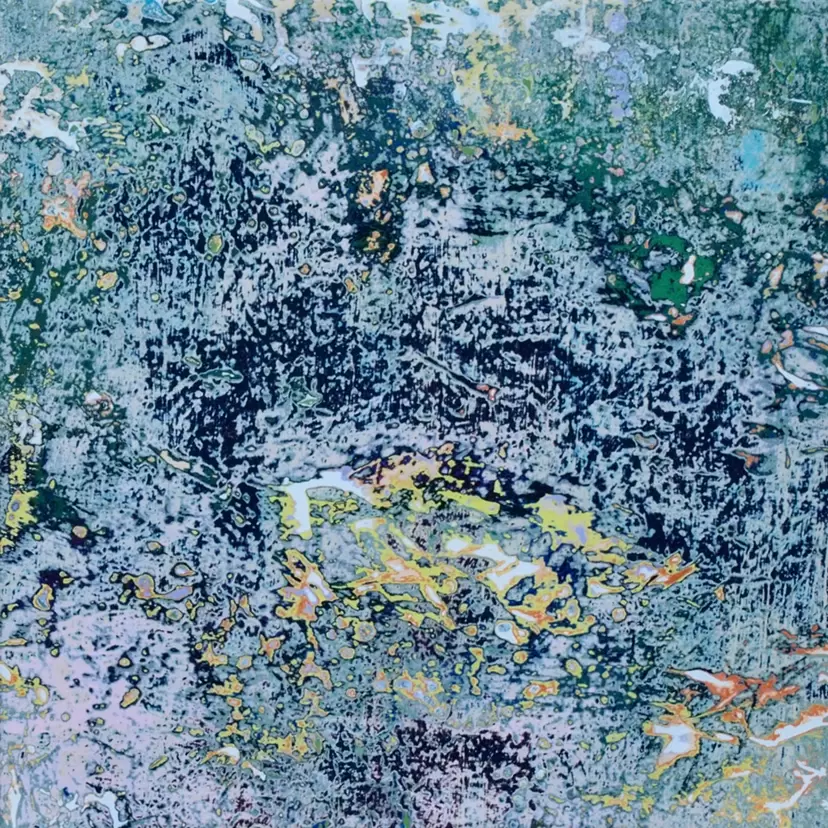
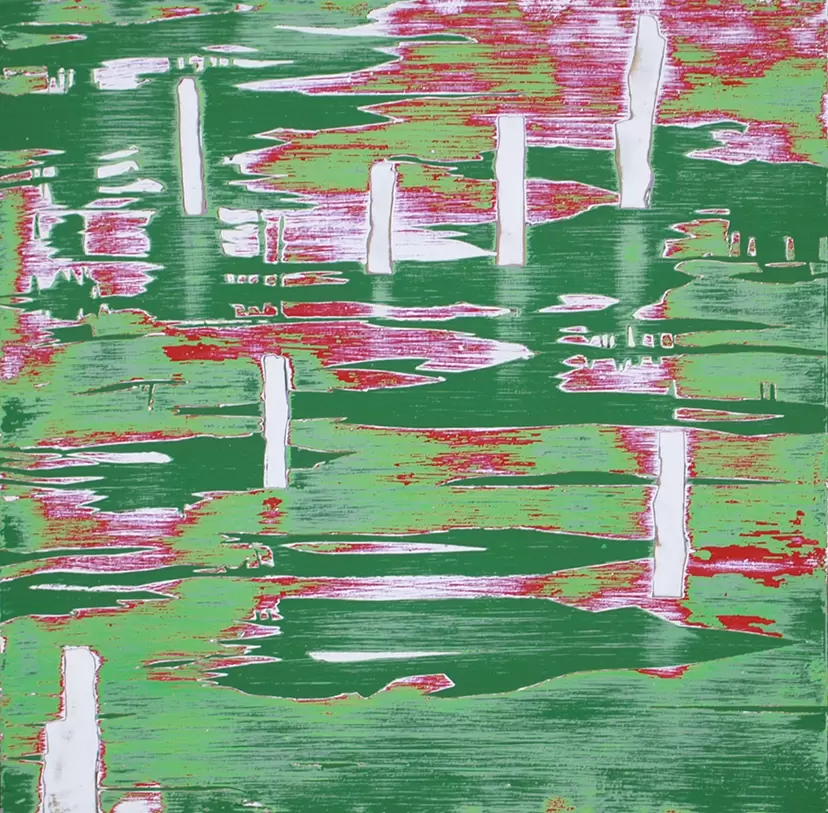
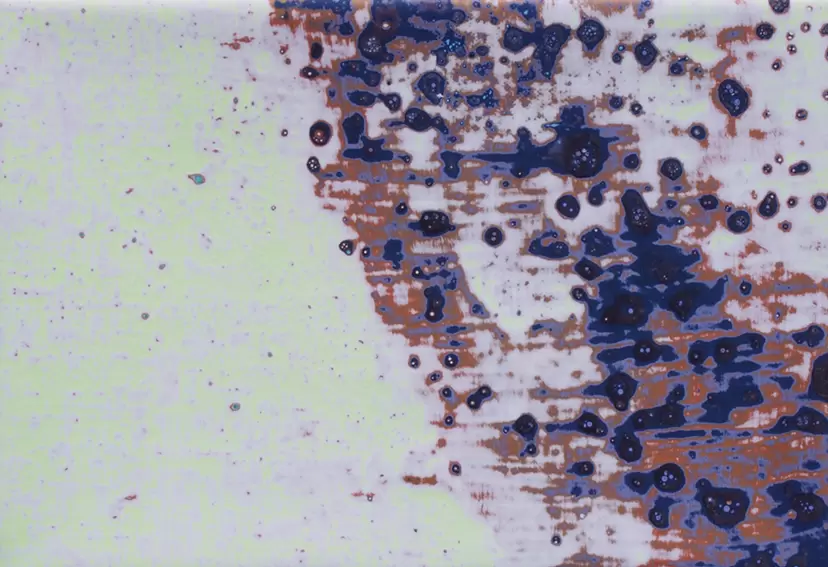
As with Fujimoto's other works, this piece is made using his technique of layering and grinding acrylic paint. This process produces the distinctive color and matière characteristic of his work.
The process begins with a full-scale line drawing made on tracing paper, separate from the panel itself. He then plans the composition of color layers to be built up—choosing colors based on what feels right pictorially, rather than staying strictly faithful to each motif's local color. Once both the linework and the color plan are largely settled, the drawing is transferred from the tracing paper onto the panel, and the actual painting begins.
The panel is mounted on both sides (a cradled, double-faced construction). A ground coat is applied across the entire surface—front, sides, and back—with the same color as the picture's background carried over onto the sides as well.
On the surface, after an initial ground coat and preparatory sanding to smooth out the wood grain, more than twenty layers of paint are built up across both broad areas and details. The surface is then sanded down with waterproof sandpaper under running water. This cycle of sanding and checking the surface is repeated until the image feels complete.
2 months
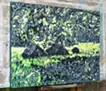
Installation view from "Close-up View, Distant View vol.2," Gallery ATOS (Okinawa), 2016.
This piece is the center work of the three shown here.
All three works are based on research trips to the Yaeyama Islands, Okinawa.
The blue seascape on the right, incidentally, is already available on ArtSticker:
"Return 3": https://artsticker.app/works/40721
觀賞擺飾在房間裡的樣子
購買方式

這件作品可供購買。

USD 1,529
*顯示的為匯率換算的參考價格。結算將以日元進行。
購買作品時是否有需要幫助?

加入等候名單
加入等待名單,以便在有作品可供購買時收到通知。
在線諮詢
專業藝術顧問在這裡協助您購買作品。如果您對推薦的作品有任何疑問,或者您在購買時遇到任何問題,歡迎使用在線諮詢。
藝術家
painter
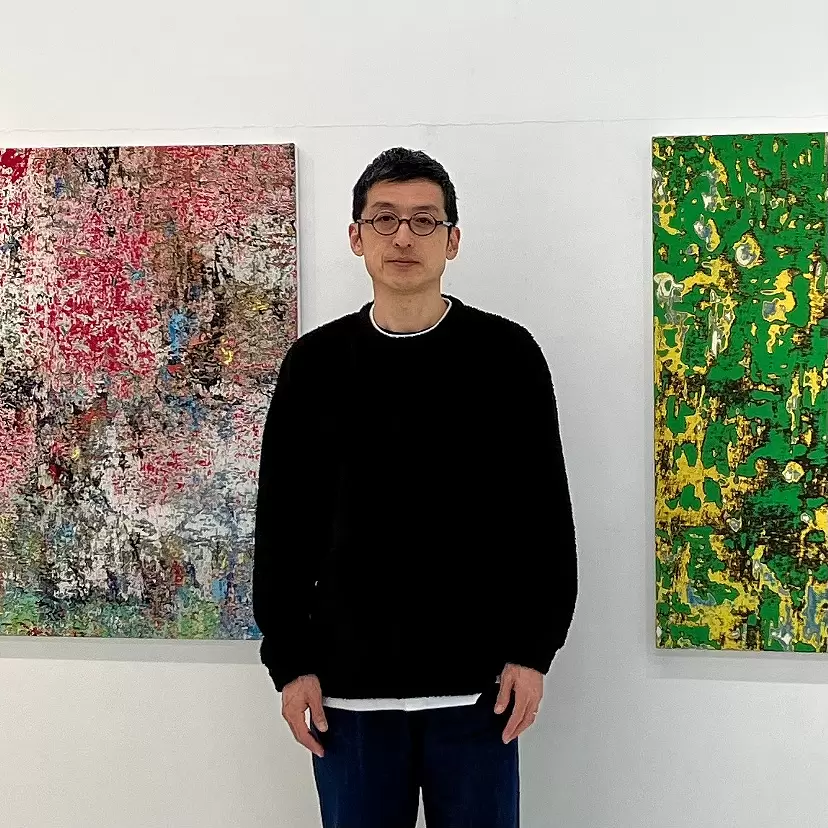
Painting as PhenomenonHideaki Fujimoto explores the possibilities of painting through a method that builds up the picture surface by layering and grinding acrylic paint. His compositions range from the representational to the non-representational, yet all share a common quality of color and matière.Born in Akashi, Hyogo Prefecture, Fujimoto developed an early fascination with vehicles and machinery that grew into a longing to "make things." This led him to AKASHI National College of Technology, where he studied mechanical engineering; his graduation research examined the wear of NBC cutting tools in metal processing, and the textures and imagery of metal he observed under an electron microscope during that research continue to inform his work today.While still a student, he grew increasingly drawn to design and graphic art, and decided to change course, transferring to the Department of Industrial Design (now the Department of Design Engineering), School of Engineering, Chiba University, where he studied design more broadly. For his graduation project, he worked in a fine art research laboratory, producing paintings.After graduating, he worked at a design office and gained other professional experience before once again deciding to pursue painting. He enrolled in the Department of Oil Painting at Musashino Art School, spending two years relearning the fundamentals of painting and completing the program in March 1997. He moved to Naha, Okinawa immediately afterward, and has been based there, continuing his practice, ever since.Having long been drawn to painting's layered structure, uniqueness, and physicality, Fujimoto arrived in 1999 at his signature technique: building the picture surface by layering acrylic paint and grinding it down with sandpaper. Since then, while continuing to explore a range of visual styles, he has consistently pursued what he calls the "layered magic" hidden within painting.In recent years, he has also actively presented and sold his work online, including through e-commerce platforms and art subscription services.
查看藝術家信息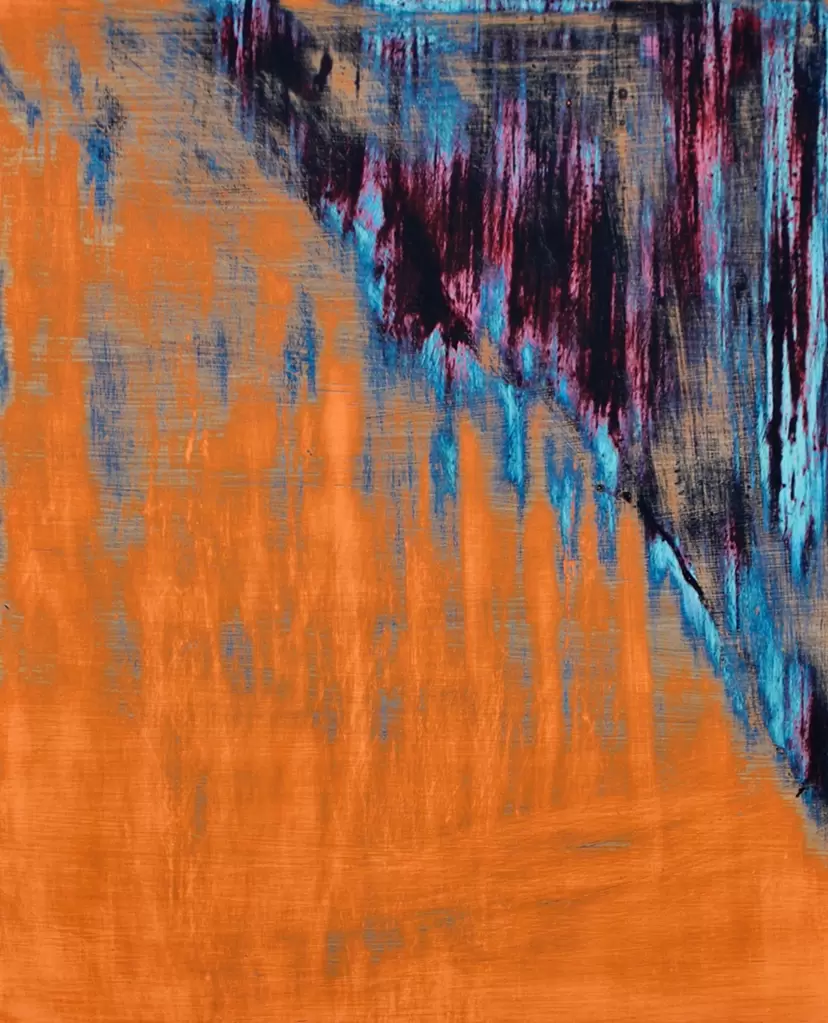
ご覧頂きありがとうございます。
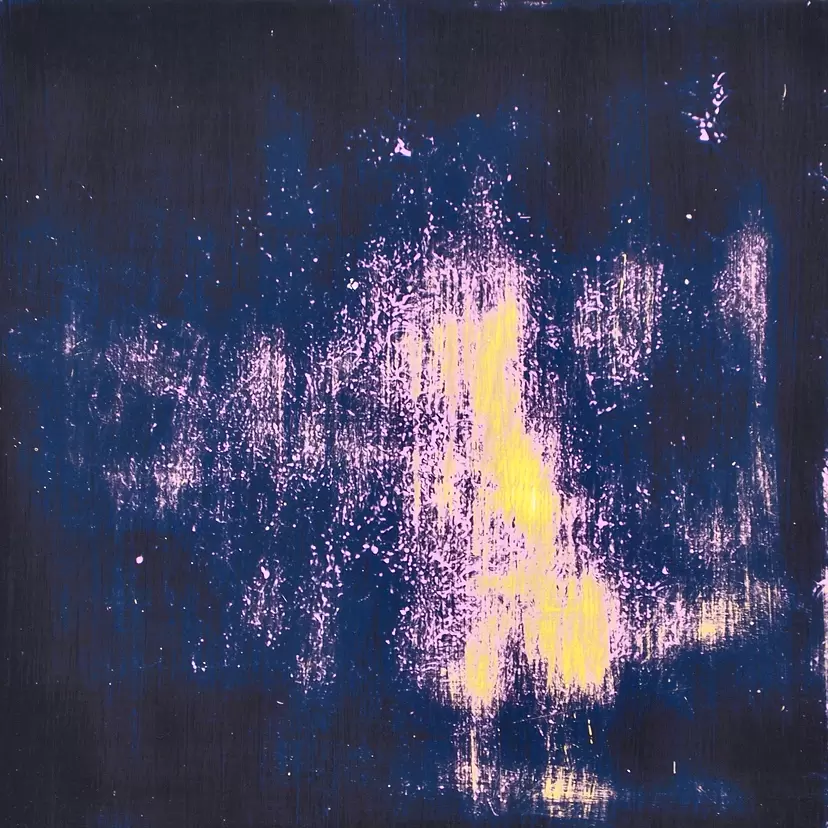
ArtStickerでは、現在「Layers of Color」シリーズからの作品を公開中ですが、他シリーズからも追加していく予定です。
多様なコンテンツや表現がある中で、「絵画のおもしろさ」を自分なりに考え探究しながら作家活動をしています。
ご支援は、作品の制作、発表活動、制作環境の維持に充てさせて頂きます。
どうぞよろしくお願い致します。