關於作品
- 製作年份
- 2008
- 材料或技法
- 具體的, 鐵, 其他的
- 尺寸
- -
- 版本
- 獨特
- 簽名
- 沒有設定
- 製作人員名單
- photo credit: William Gomes
- 畫框
- 不包含
- 作品證書
- 沒有設定
- 類別
- 雕塑
- 風格
- 其他的
作品詳情
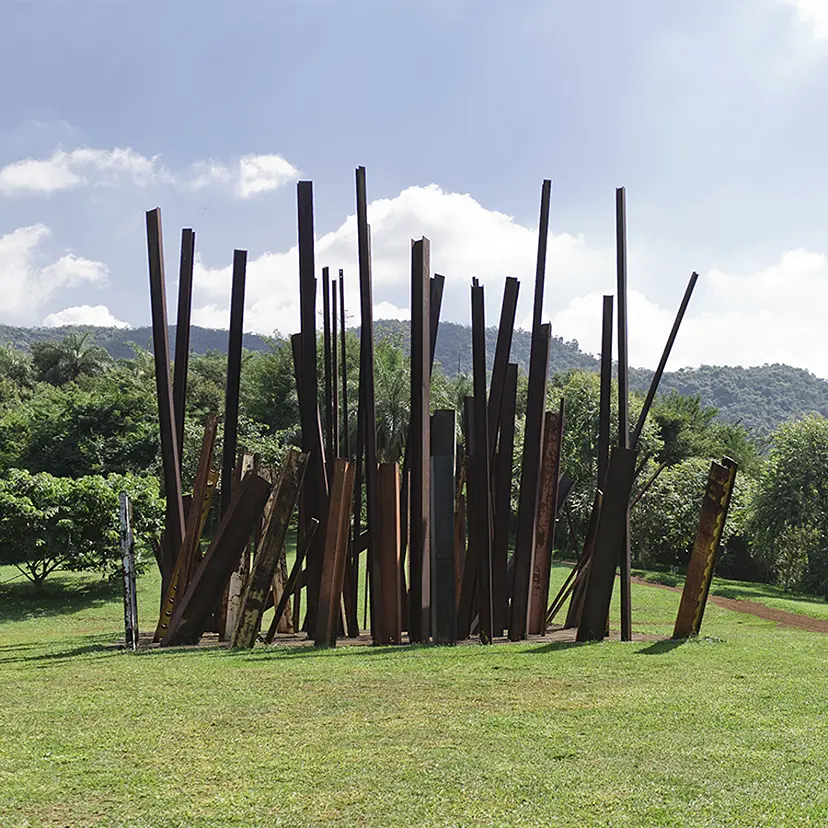
《Beam Drop Inhotim》(2008)は、もともと1984年にニューヨーク州の彫刻公園であるアート・パークにて展開され、3年後に解体されたものを再現した作品である。本作はイニョチンにて初めて再現され、それまでは20年以上作品の記録しか残されていなかった。パフォーマンス・アートと呼ばれうる行為として、12時間におよび、45mもの高さのクレーンから、71本の鉄骨梁をまだ固まっていないコンクリートのプールに落とすことから作品が構成される。この衝撃的な操作により、大規模な彫刻作品である本作は、周囲の環境と驚くべき関係性を作り上げ、丘の上に異様な風景を立ち上げる。鉄骨梁が作りあげるランダムなパターンは、アーティストによるクレーンのコントロールと鉄骨梁の落下にともなう内在的なランダム性、そしてその重量に起因する圧倒的な暴力性による。《Beam Drop Inhotim》(2008)の制作にあたり、バーデンはベロオリゾンテ周辺の屑鋼場で使用済みの鉄骨梁を選び、そしてそれらを人為的に操作することで、抽象表現主義の身振り、とりわけジャクソン・ポロック(1912–1956)の絵画を想起させるコンポジションを作り上げる。バーデンはポロックを本作の重要な参照元として挙げている。《Beam Drop Inhotim》(2008)はまた、その解体を同時に示唆するにも関わらず、現代アートにおける記念碑的な彫刻の伝統とも結び付けられる。バーデンにとって、一つ一つの鉄骨梁は落下して地面に叩きつけられる彼自身の身体のようであり、彼がボディー・アートの先駆として果たした歴史的な役割を思い起こさせる。キャリア全体を通して、彼はしばしば危険が充満した過激な状況を作り出してきた。そしてそれは素材の物質的な限界に挑戦するものであり、そして権力やステータスといった揺るぎないカテゴリーに対して疑問を呈するものである。
Beam Drop Inhotim (2008) is a re-creation of a work that was originally executed in 1984 at Art Park, a sculpture park in New York State, and destroyed three years later. The work was re-created for the first time at Inhotim, after surviving only as documentation for more than twenty years. In an action that could be called performance art, for 12 hours a 45-meter-high crane dropped the 71 beams composing the work into a pool of fresh concrete. This high impact operation resulted in a large-scale sculpture that bears a striking relationship to its surroundings, situated on a hilltop and creating an epic view within the landscape. The random pattern of the beams resulted as the artist’s control of the crane combined with the inherent randomness of the beams’ fall and the extreme violence caused by their massive weight. For the production of Beam Drop Inhotim (2008), Burden selected used steel beams at scrap-steel yards near Belo Horizonte, and then manipulated them to create a composition that recalls the gesturalism of Abstract Expressionism, especially the paintings of Jackson Pollock (1912–1956), which he has identified as an important reference for the work. Beam Drop Inhotim (2008) is also connected to the tradition of monumental sculpture in contemporary art, although it proposes its deconstruction. For Burden, each dropped beam is like his body that falls and slams into the ground, recalling his historical role as a pioneer of body art. Throughout his career, he has often created extreme situations pervaded by a sense of danger, which have challenged the physical limits of the materials and questioned the stable categories of power and status.
Beam Drop Inhotim (2008) [título que poderia ser traduzido livremente por "queda de viga"] é a recriação de uma obra realizada originalmente em 1984 no Art Park, um parque de esculturas no Estado de Nova York, e destruída três anos depois. A obra foi refeita pela primeira vez em Inhotim em 2008, depois de ter subsistido apenas como documentação por mais de 20 anos. Numa ação que poderia ser descrita como performática, durante 12 horas um guindaste de 45 metros de altura lançou em uma poça de cimento fresco as 71 vigas que compõem a obra. O resultado desta operação de alto impacto é uma escultura de grandes dimensões que ocupa o alto de uma montanha em Inhotim, que se relaciona de maneira marcante com seu entorno, criando uma visão épica em meio à paisagem. O padrão aleatório da escultura é formado pela queda das vigas, combinando o controle do artista, que mirava o guindaste na poça de concreto fresco, à violência e o acaso provocados pelo peso do material. Para a produção de Beam drop Inhotim, foram selecionadas vigas usadas em ferros-velhos próximos a Belo Horizonte, posteriormente manobradas pelo artista, criando uma composição que remete à gestualidade do expressionismo abstrato, especialmente das pinturas de Jackson Pollock (1912-1956), que o artista aponta como referência importante da obra. A obra filia-se, também, a uma tradição de esculturas monumentais importante na arte contemporânea, mas propõe, no entanto, sua desconstrução. Para Burden, cada viga lançada é como se fosse seu corpo caindo e batendo contra a terra, algo que remete à sua posição histórica como pioneiro da body art [arte do corpo]. Frequentemente em sua obra, Burden cria situações extremas e muitas vezes perigosas, desafiando os limites físicos dos materiais, que, metaforicamente, questionam as categorias estáveis de poder e status.
Support art institutes temporarily closed due to the COVID-19 pandemic
支援できる美術館はこちら
Below is a link to the art institute that you can support
展覽資訊
- 當前的展覽
- ArtSticker Brazil2020.05.18 - 2099.05.18
藝術家

Artist
American, 1946–2015 Chris Burden has produced some of the most shocking works in the history of 20th century American art, including spending five days and nights in the fetal position inside a locker, having a spectator push pins into his body, being "crucified" to a Volkswagen Beetle, being kicked down two flights of stairs, and even having himself shot. The challenge for viewers is to try to understand such troubling and seemingly "inartistic" gestures. Such an understanding is made possible by seeing these works within the context of Conceptual art during the 1970s, where artists concerned themselves with art based on ideas and action rather than objects created for an elite art market. Additionally, the violent images of the war in Vietnam and the television media in general provided a background setting for Burden. His work further challenges viewers to take stock of their own moral compasses and widen their understanding of the ways in which it is possible for art to serve humanity.
查看藝術家信息