Born in 1993 in Shizuoka.
First, draw a picture on a computer, then create an image of digital data once.
At that time, a “bug” created by converting certain image data into text data and rewriting the contents is used as part of the motif.
A “bug” is expressed as damage to information unrelated to one's own intentions, bringing chance to the screen. Based on the digital data created, it will transition to a real painting.
By using foil or mineral pigments as materials, inorganic image data has a sense of substance.
This migration process is like going back and forth between the data world and the real world. It's similar to the feeling of being drawn back to reality when you suddenly shift your field of view from the screen after working for a long time on a smartphone or computer.
Born in 1993 in Hamamatsu, Shizuoka. Production is carried out on the theme of the intersection of “digital and matter,” “chance and operability,” and “tradition and modernity” in modern times. The work begins with work on a personal computer or smartphone, generates “bugs” by intentionally causing data corruption due to text conversion, and incorporates them as visual motifs.
This “bug” is both damage to information by a computer and a symbol of chance that is born beyond one's own intentions. By converting a jpeg file into text and rewriting it, many error images that cannot be reconstructed are generated, and they are used as basic materials for the work.
Also, digital images generated in this way are converted into material works using paint or foil. By using materials such as the particle feel of mineral pigments and the reflected light of foil, tactile reality and depth are given to the data, and the immaterial phenomenon called bugs is brought back to the real world. The data on the screen is not only printed out, but also sublimated into art with traces of hands by being reconstructed with brushes and brushes.
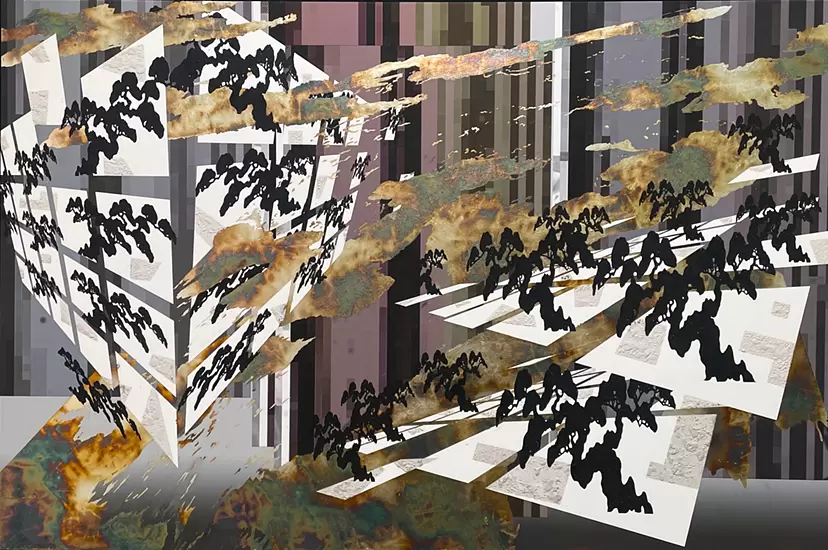
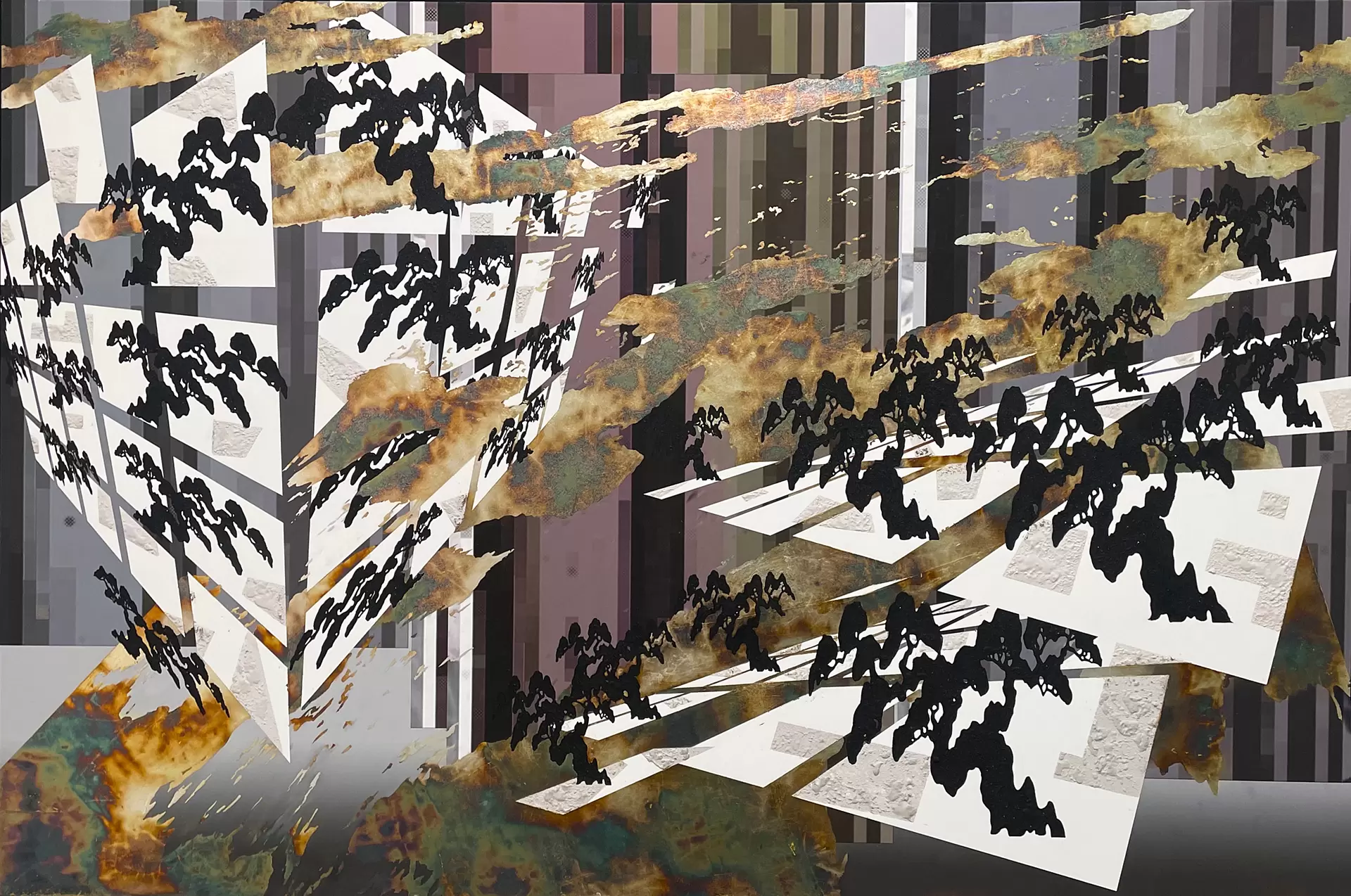
The “Space Pine Forest Map” series consists of symbolically drawing a pine silhouette and repeating it by copy and paste. Although this is a digital operation that modern people perform on a daily basis, it also has a structure similar to traditional pattern expressions seen in Ogata Korin's “Swallow Flower Map”, etc. Furthermore, the familiar landscape of pine groves in my hometown Hamamatsu city influenced motif selection, and personal memories and the universality of Japanese culture are connected through the motif called “pine.”
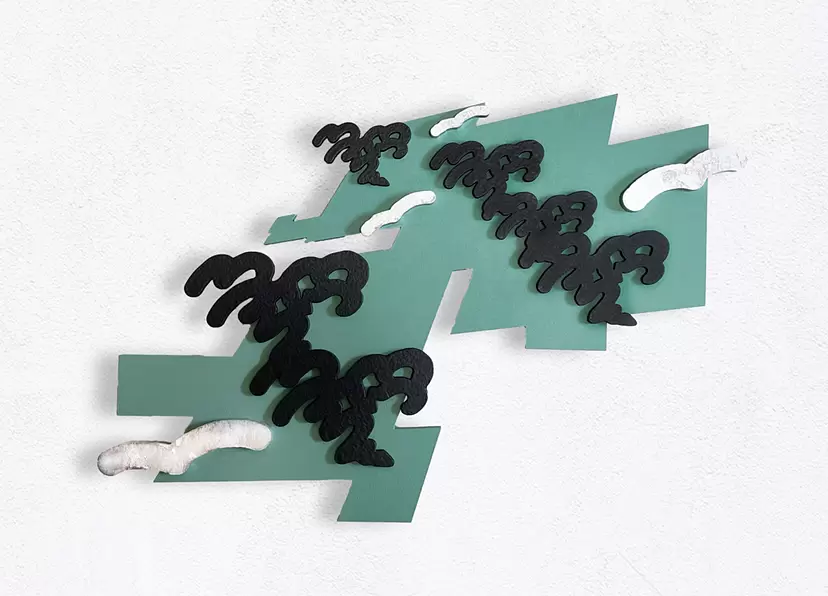
In the “EMERGE” series that continues, the theme is the transition from two dimensions to three dimensions. An image composed of a digital flat screen is three-dimensional as a substance and takes a configuration that “floats up” from a wall. This is an attempt to re-examine the boundary between virtual information space and reality, and it also visually reproduces the “switching of senses” when you suddenly take your gaze off and return to the real space after working for a long period of time.
They focus on Japanese traditions and Asian values, and have an interest in a sense of form rooted in animism and climate before the Western concept of “art,” which was imported after the Meiji period. Instead of simply returning to tradition, they are exploring new possibilities for East Asian art by interlacing with modern digital technology and consciousness.