


The story of Kyokushi Village

製作年份: 2022
材料或技法: 石頭, 大理石, 玻璃, 金葉子, 水泥, 控制板
尺寸: 89 × 89 cm
版本: 獨特
簽名:包括

關於作品
- 製作年份
- 2022
- 材料或技法
- 石頭, 大理石, 玻璃, 金葉子, 水泥, 控制板
- 尺寸
- 89 × 89 cm
- 版本
- 獨特
- 簽名
- 包括
- 畫框
- 不包含
- 作品證書
- 沒有設定
- 類別
- 壁畫
- 風格
- 社會/政治/歷史, 浪漫的
作品詳情
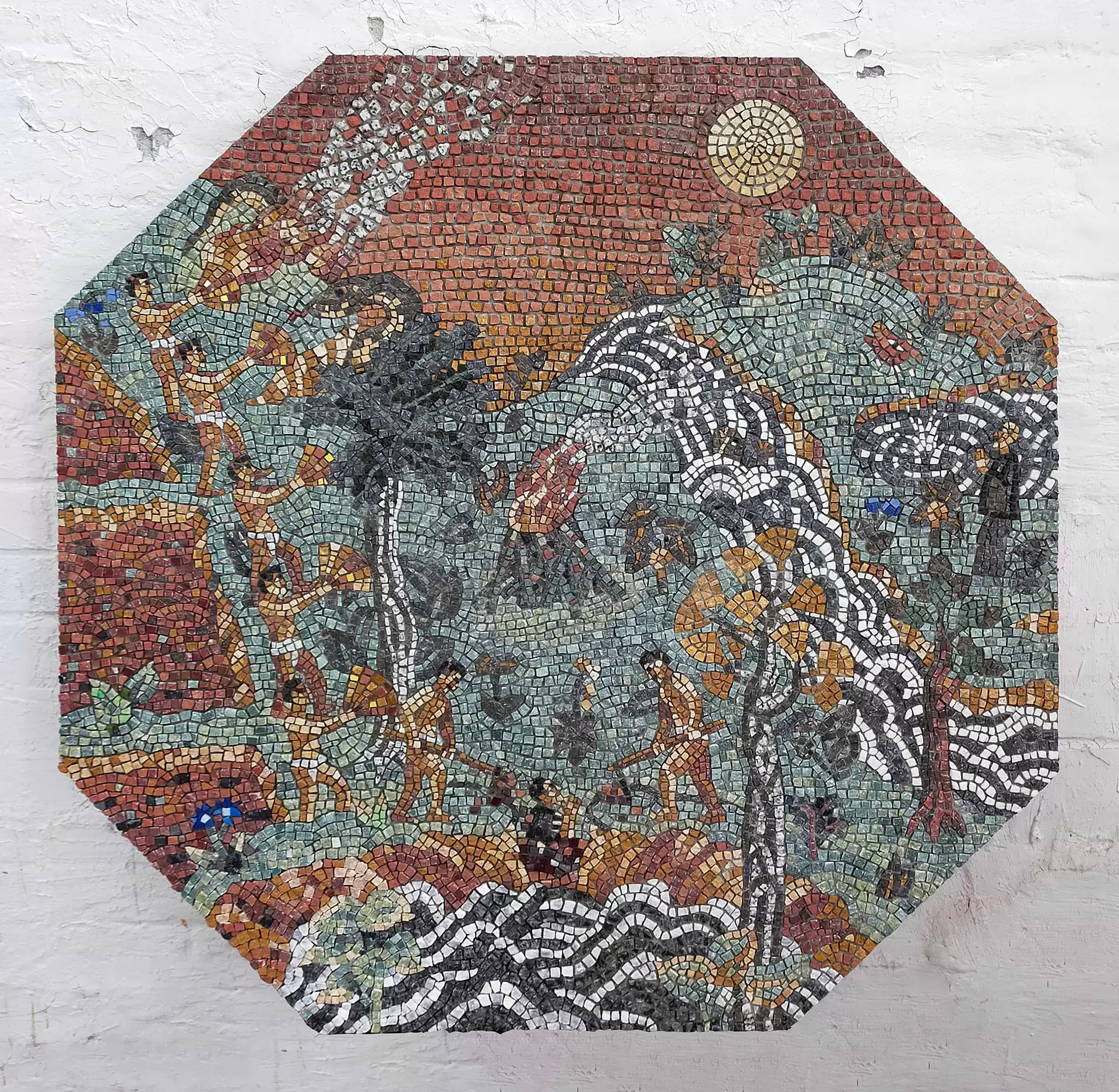
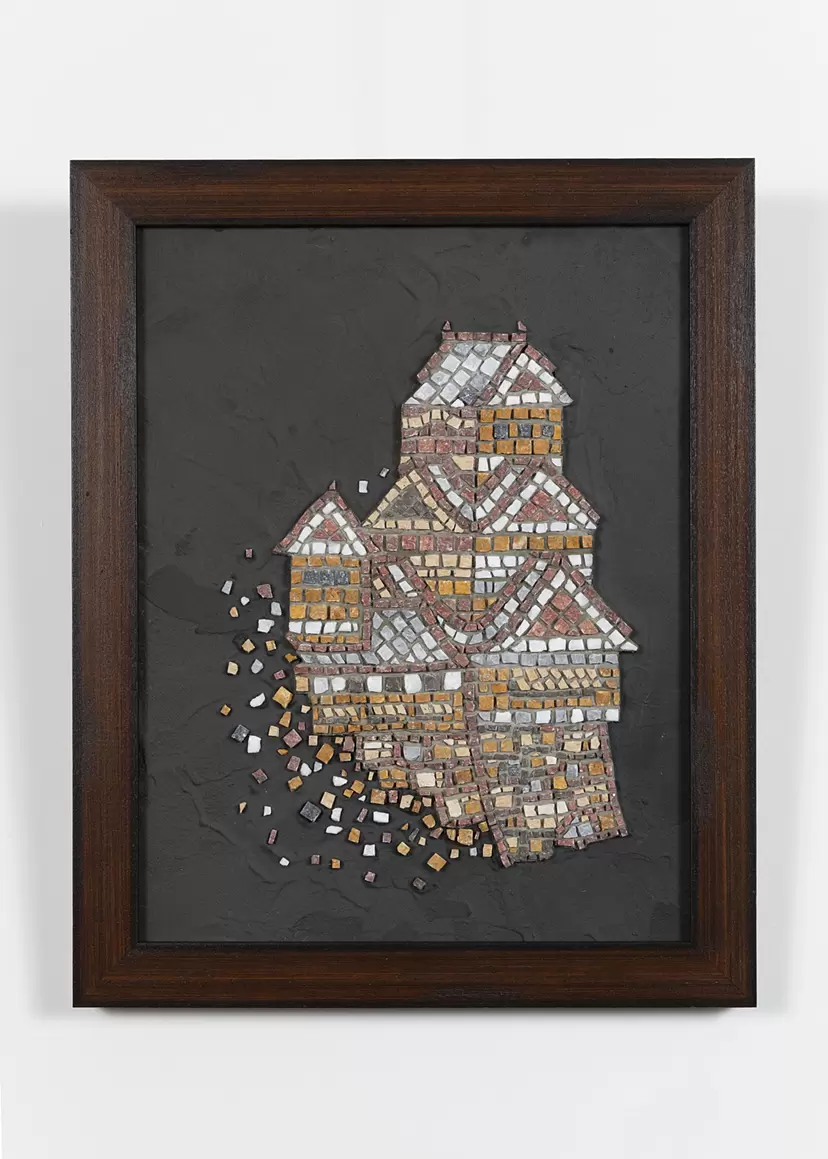
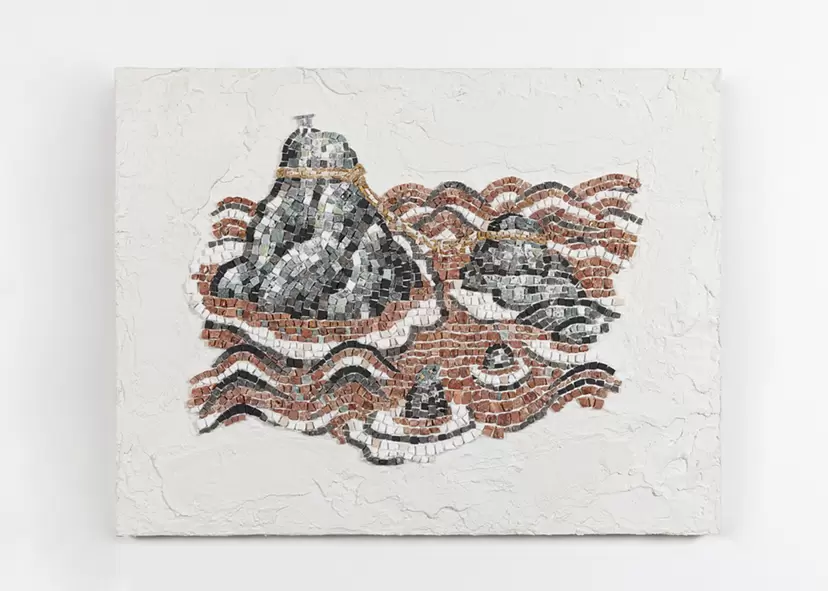
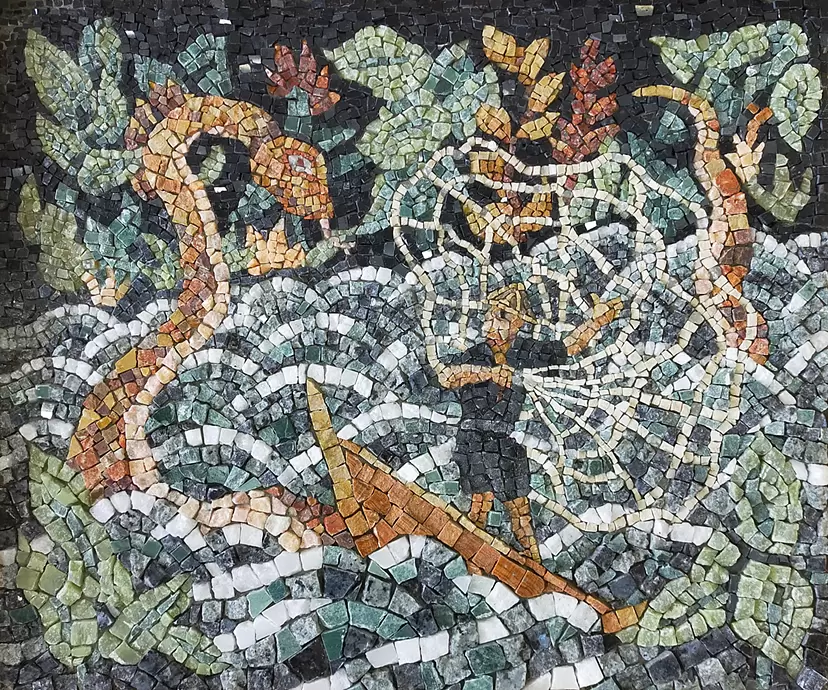
I created it with the motif of a traditional group handed down in the former Kyokushi village in Kumamoto prefecture where I spent my childhood. Kyokushi Village is a village where my father's parents' house is located, and I myself lived in during my childhood. It's a village with a good view, with a large field spread out, but I learned that there are many stories in that land, so I made it into a work.
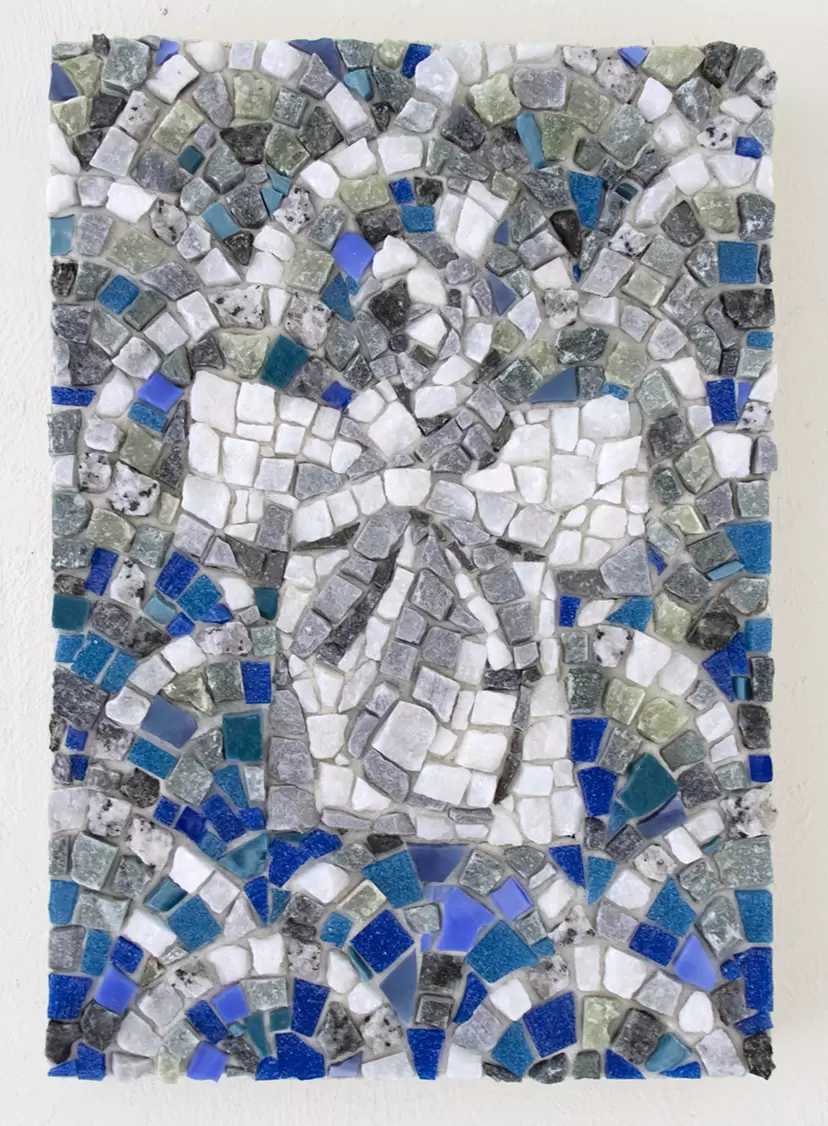
(Center of screen) Onibi-taki is a traditional event that means to ward off evil.
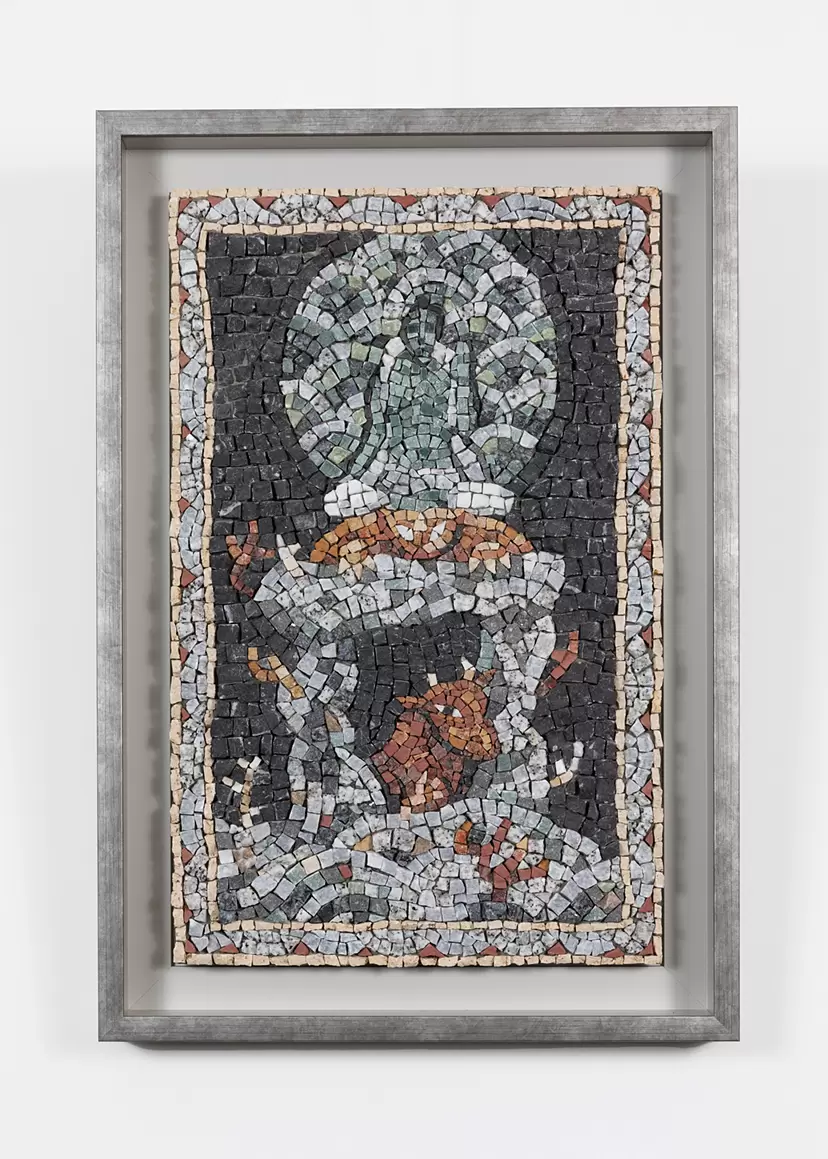
(Right side of the screen) There was a land called Yunoyama where hot springs that are effective against all diseases spring up. At one point, a strange monk came there and put something like a cow's head in hot water and cast a spell, and something like that cow's head sprang out briskly somewhere. Then, the hot springs that had sprung up in Mount Yunoyama withered away, and hot springs sprang up in the distant city of Yamaga instead.
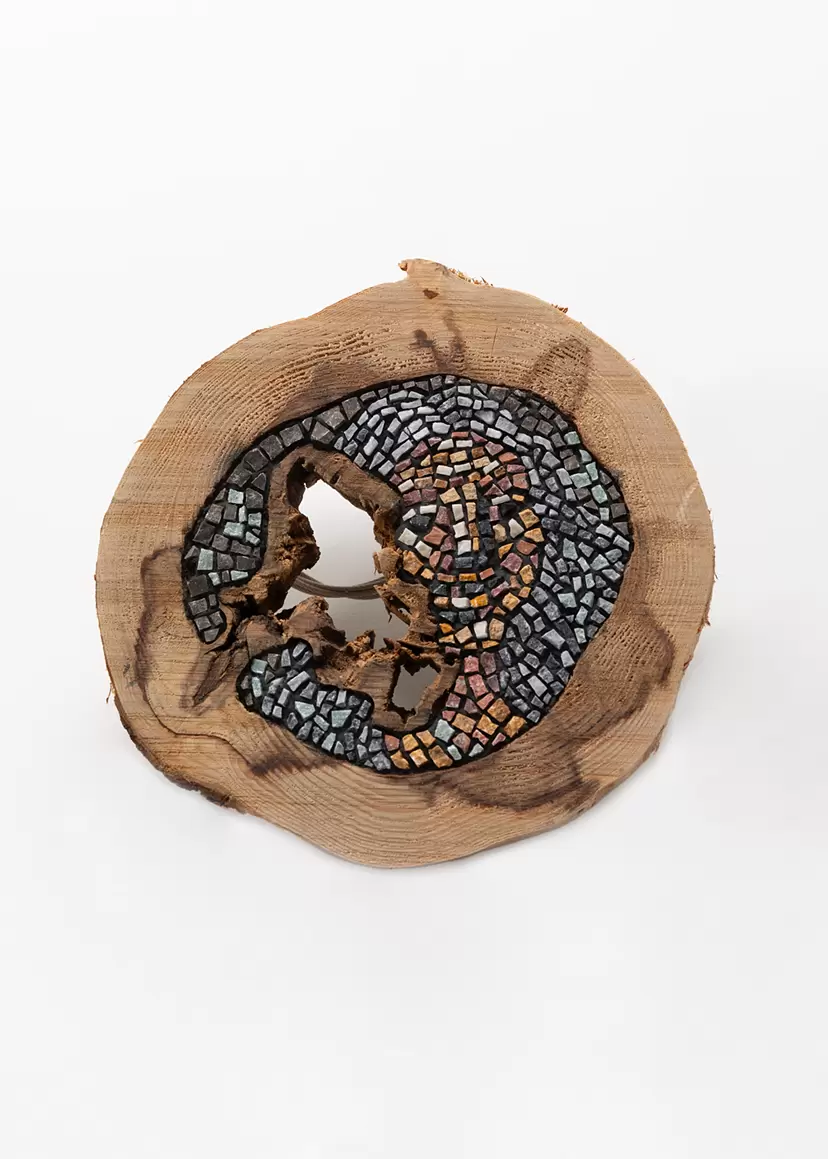
(Bottom of screen) There is a story about a large pond for irrigation at an altitude of 200m in the southeast of Yubune village. At one point, three villages at the foot of the mountain gathered and decided to build a large reservoir for paddy field irrigation. However, construction did not go well, and every time during the rainy season, the embankment collapsed due to rising water, and the Yubune village was flooded. It is said that people who have done their work finally decided to set up a human pillar, but they had trouble selecting people, and they had no choice but to divert the method used when selecting human pillars in the nearby coastal area and chose those who had torn kimonos covered with horizontal stripes of cloth. The person selected was the leader of the 10-person group (autonomous organization). The group leader stood at a crack in the embankment as a human pillar, covered it with soil while praying for completion of construction, and buried it.
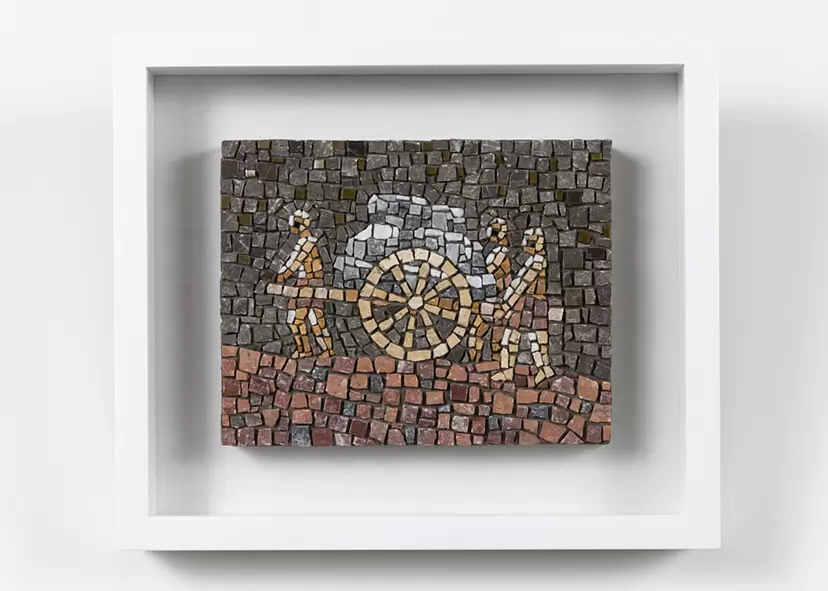
(Left side of the picture) There was a wealthy man with 1,000 servants and 5,000 hectares of farmland. He tried to finish planting rice in that vast field in one day, but he couldn't finish in time and the sun started to set. So he lined up some of his strongest men at the edge of the field, gave them golden fans and had them fan the sun back up to a high place. He tried to finish planting rice before the sun went down again, but the men were exhausted and the sun finally set. So he spread oil on a nearby hill and set it on fire, and finished planting rice by light, but the embers turned into a fireball and burned down the wealthy man's house and storehouse. It is said that this fireball was the curse of a giant snake that lived on the hill that the wealthy man had set on fire.
Cited from:旭志村史
藝術家

馬賽克藝術家
事業 1995 出生於熊本 2020 畢業於東京藝術大學美術學院油畫系 2023 畢業於東京藝術大學美術研究所繪畫、壁畫系 2023 Pola Art Foundation 海外實習生在意大利 2024 Accademia di Belle Arti Ravenna 他畢業於東京藝術大學,主修油畫,並在同一大學研究生院的壁畫實驗室 2 學習馬賽克表達。完成後,她在拉文納美術學院接受馬賽克培訓,擔任波拉藝術促進基金會的海外培訓。他學習了拉文納的傳統馬賽克技術,目前正在尋找馬賽克的進一步表達方式。 作為三年級本科生,我在暑假期間第一次去了住所。我在搜索,因為我想使用只能在這片土地上繪製的東西,而且在搜索時,我遇到了那個土地的傳統、傳統和習俗。從那時起,風景不僅僅是一個景觀,我開始感覺到一些特別的東西。只有根源於那片土地的人才特別的風景,通過了解傳統和習俗來傳遞給我。經過這樣的經歷,我開始認為,我想將已經傳承的東西作為字母和單詞記錄為圖片。 當我在本科生時,我主要是使用油畫尋找表達方式,但是在屬於壁畫實驗室 2 之後,我開始測試用馬賽克的記錄。在古代創作的馬賽克上描繪了當時的神話和習俗,直到現在仍然是重要的文化財產。我遇到這些馬賽克的機會讓我決定要用什麼材料來表達長時間傳承的圖案。此外,馬賽克的「低分辨率」特徵非常適合表達略微不到現實的故事。 由於大理石和玻璃用於馬賽克,因此它們非常耐用,如果狀況良好,它們可以使用 1000 年或更多。我認為馬賽克是一種媒介,可以實現從過去傳承到未來長時間傳承的地區傳統的動機。 故事和習俗與人們生活的地方一樣多,但現實是它們變得過時並隨時代消失。我想了解仍然存在的故事,並以一種在消失之前可以看到像馬賽克的形式保存人與土地之間的特殊關係。這些作品是我走過那片土地的跡象,它們可能會成為我自己的記錄。
查看藝術家信息



今後大きめなモザイク作品の制作が増えていきますので、ご支援いただけたら嬉しく思います。